Water Damage Restoration Las Vegas
In August 2022, a monsoon flooded my Summerlin home office and I made every wrong call from the start. I grabbed a mop, watched the floors appear to dry out, and told myself I had things under control. That misplaced confidence proved costly. What began as a minor water intrusion turned into a $34,000 mold disaster, because moisture trapped inside the walls kept rising long after the floor surfaces felt completely dry. I built VegasRebuild so no Las Vegas homeowner faces the same situation without knowing which emergency restoration companies to call within the first hour.

Written by David Reyes. I'm a software engineer in Summerlin who lost $34,000 because I thought dry surfaces meant dry walls. They didn't.
Last updated October 2026
I Got You a Deal with M&M Restoration
After reviewing every restoration company in Las Vegas, M&M is the one I trust most. I asked Jake over at M&M to put together something for my readers: a free professional moisture inspection and 10% off any restoration work you're paying out of pocket (outside of insurance). Just drop your name and email below and I'll send you a personal coupon code you can mention when you call them.
Water Damage in Las Vegas? Here's What to Do Right Now
Shut Off Water and Power
Find the water source and close the valve. If water is near electrical outlets or panels, kill the circuit breaker for those areas. Do not enter standing water if electricity may still be on.
Document Everything, Then Call a Pro
Take photos and video of all affected areas before any cleanup. Then call a licensed, IICRC-certified restoration company with 24/7 emergency service. Verified Las Vegas companies respond within 60 minutes. Every hour of delay increases mold risk.
Call Your Insurance Company
File the claim before you clean anything. Your adjuster needs to see original damage documentation. If you clean up first and file later, you have destroyed the evidence that supports your payout.
I wrote a separate walkthrough of what to do when your house floods in Las Vegas, with the step-by-step I wish I had followed.
Why 280+ ppm Hard Water and Caliche Soil Make Las Vegas Homes Vulnerable
I had no idea about any of this before my flood. I did not know what caliche was. I did not know my tap water was corroding my pipes from the inside. I learned all of it after the fact, reading reports and talking to plumbers while my walls were being torn apart. If I had understood these four factors before August 2022, I would have done a plumbing inspection and saved myself $34,000.
Las Vegas is not just any desert city. As of October 2026, the combination of mineral-heavy water, impermeable geology, extreme temperature swings, and aging construction creates water damage risks that homeowners in other markets simply do not face.
Tap Water at 280+ ppm Corrodes Pipes Years Early
Las Vegas tap water tests at 280+ parts per million hardness, among the hardest municipal supplies in the country. That mineral load accelerates corrosion inside copper pipes and water heater tanks, causing pinhole leaks and catastrophic failures years before homeowners expect them.
Caliche Hardpan Rejects Every Drop of Flash Flood Water
Caliche (the calcium carbonate hardpan just below most Las Vegas lots) is nearly impermeable. When monsoon storms dump 1 to 2 inches of rain in under an hour, water has nowhere to go. It sheets across the surface, overwhelms storm drains, and enters homes through garage doors, window wells, and foundation cracks.
75-Degree Daily Swings Fatigue Every Pipe Joint
Winter nights drop to 35 to 40 degrees. Summer afternoons exceed 115. That 75-degree daily swing, repeated hundreds of times a year, causes constant expansion and contraction in copper and PVC pipe joints. Over time, those joints fatigue and fail.
Homes Built 1998 to 2007 Are Now 18 to 28 Years Old
Tens of thousands of Las Vegas homes were built during the city's explosive growth phase. Those homes are now right at the age when original water heaters, supply lines, and drain pipes start failing. If your home was built during this era, a plumbing inspection is worth doing proactively.
Category 1, 2, or 3: How Contamination Level Changes Everything
My flood started as Category 1, clean water from a monsoon. By the time I finally noticed the wall damage six weeks later, the water sitting behind the drywall had already degraded to Category 2. Knowing your water's category matters because it determines cost, required safety protocols, and which materials can realistically be saved. No one laid that out for me when it would have made a real difference.
The IICRC S500 Standard classifies water damage into three categories based on contamination level. The category determines which materials can be saved, which must be demolished, and what safety protocols technicians must follow.
Clean Water
Sources: broken supply lines, faucet overflows, appliance malfunctions (dishwashers, ice makers), rain intrusion through roof leaks.
Lowest health risk, but do not let the word "clean" create a false sense of security. Category 1 water degrades to Category 2 or 3 within 24 to 48 hours of contact with building materials. Professional drying is still essential.
Grey Water
Sources: dishwasher and washing machine overflow, toilet overflow containing urine (no solids), sump pump failures, aquarium leaks.
Contains biological and chemical contaminants. Technicians apply antimicrobial treatments on all affected surfaces. Porous materials like carpet padding and drywall that have absorbed grey water typically must be removed rather than dried in place.
Black Water
Sources: sewage backups, flooding from rivers or streams, standing water with visible bacterial growth, toilet overflow with solid waste.
Highest health risk. Requires full PPE (respirators, Tyvek suits, gloves), containment barriers, aggressive demolition of all affected materials, and often post-remediation air quality testing before clearance. Do not enter a Category 3 loss area without proper protection.
Day-by-Day: What Happens During a Las Vegas Water Damage Restoration Job
This is the process I watched play out in my own house. What surprised me was how little of it I understood while it was happening. On day one I kept asking the crew when they would be done, not realizing they had barely started. The drying phase alone took five days. If you are going through this right now, knowing the timeline helps you set realistic expectations and catch any corners being cut.
Professional water damage restoration is not a one-day job. It follows a structured, standards-based process, and as of August 2026, IICRC-certified companies in Las Vegas remain the benchmark for documentation and drying protocol. Here is what a typical residential job looks like from the first call to the final walk-through. (I broke down the full timeline and what drives delays separately.)
Emergency Response and Extraction
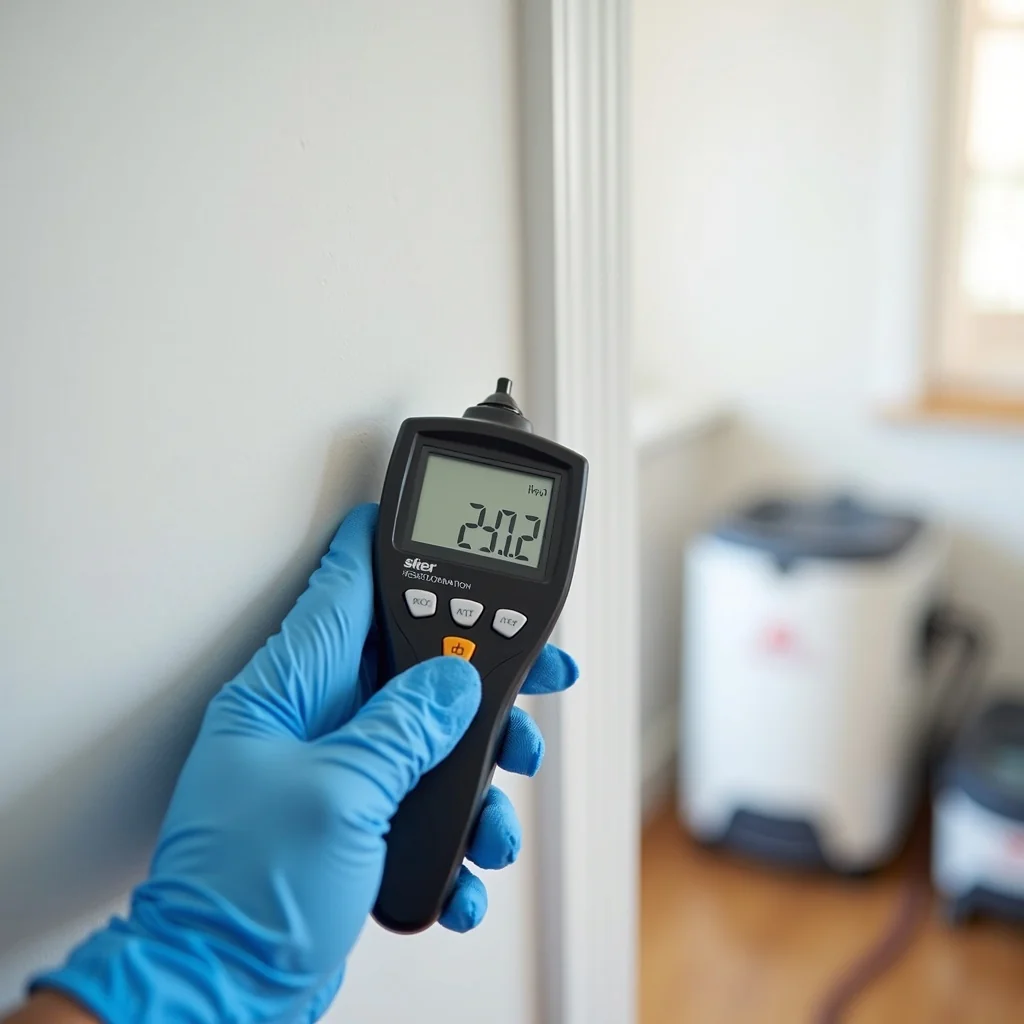
- ✓Initial inspection and moisture mapping using moisture meters and thermal imaging camera
- ✓Water extraction with high-powered water vacuums and sump pumps
- ✓Complete photographic documentation for insurance claim
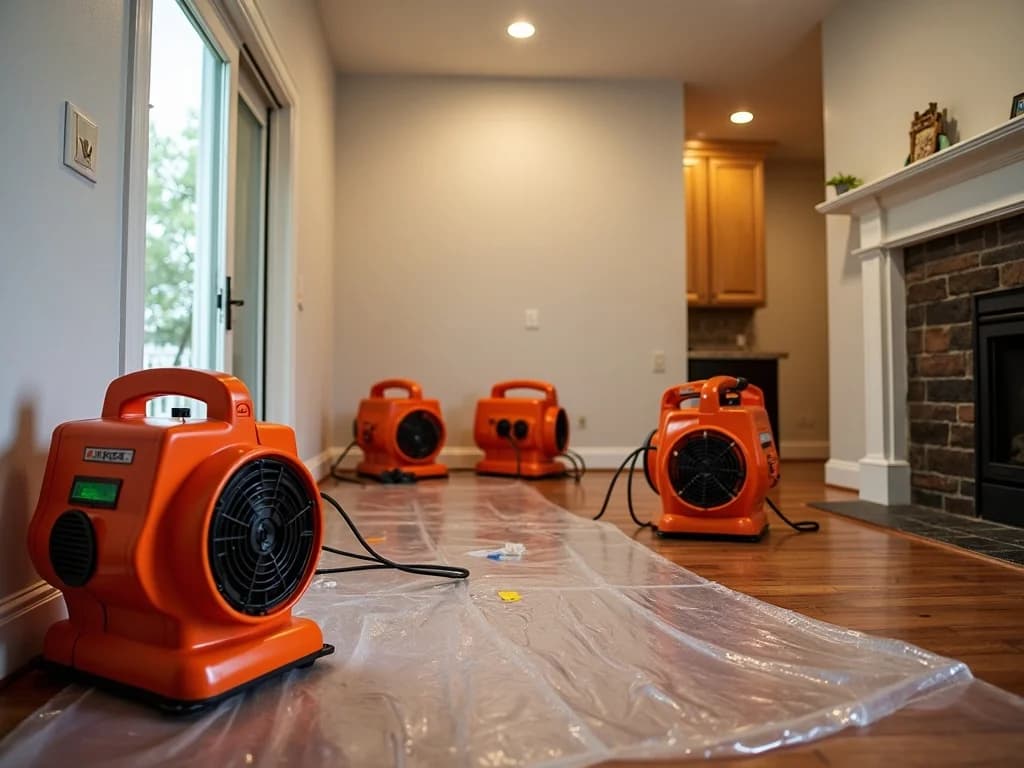
- ✓Initial drying equipment setup (air movers, dehumidifiers)
- ✓Water category assessment to determine safety protocols
Industrial Drying Setup
- ✓Full deployment of industrial air movers and LGR dehumidifiers
- ✓Removal of non-salvageable saturated materials (carpet padding, affected drywall)
- ✓Antimicrobial treatment application if Category 2 or 3 water involved
- ✓First documented moisture reading at all affected points
- ✓Insurance adjuster communication regarding scope of work and equipment deployed
Daily Moisture Monitoring
- ✓Documented moisture readings taken daily at all monitoring points
- ✓Equipment repositioning based on drying progress readings
- ✓Wall cavity inspection if moisture persists behind surfaces
- ✓Ongoing log maintained for insurance file
Drying Completion and Clearance Testing
- ✓Final moisture reading: all materials must reach equilibrium moisture content
- ✓Air quality testing if mold concerns exist (especially Category 3 losses)
- ✓Drying equipment removal
- ✓Final drying report prepared for insurance carrier
Reconstruction Planning and Rebuild
- ✓Reconstruction estimate prepared using Xactimate software (insurance industry standard)
- ✓Insurance carrier negotiation on reconstruction scope and costs
- ✓Subcontractor scheduling: plumbers, painters, flooring installers, drywall contractors
- ✓New drywall, paint, and finishes installed to return property to pre-loss condition
How Much Does Water Damage Restoration Actually Cost in Las Vegas?
| Damage Type | Average Cost |
|---|---|
| Minor leak cleanup | $500 to $1,500 |
| Category 1: Clean water (burst pipe) | $1,500 to $5,000 |
| Category 2: Grey water | $4,000 to $10,000 |
| Category 3: Black water / Sewage | $7,000 to $25,000+ |
| Full reconstruction | $15,000 to $50,000+ |
*Costs vary based on affected area, materials, and extent of structural damage. Most sudden damage is covered by homeowner's insurance.
Want a more precise breakdown for your situation? Use our interactive calculator below. Select the water category, floor type, affected area, and other factors to get a personalized estimate based on real Las Vegas pricing.
Will Your Insurance Actually Pay for Water Damage in Nevada?
Yes, in most cases. Standard Nevada homeowner's insurance policies cover sudden, accidental water damage: burst pipes, appliance failures, and roof leaks. They typically do not cover gradual leaks, poor maintenance, or flooding from outside the home (which requires separate flood insurance). The line between what is covered and what is not is blurrier than you would think. I dug into this in my insurance coverage breakdown.
Consider hiring a contractor with an in-house public adjuster. A public adjuster represents you, not the insurance company. They review your policy, document all damage using Xactimate software, and negotiate directly with your insurer. Studies show homeowners with public adjuster representation receive 20 to 40% higher settlements than those who negotiate alone.
How the insurance claims process actually works →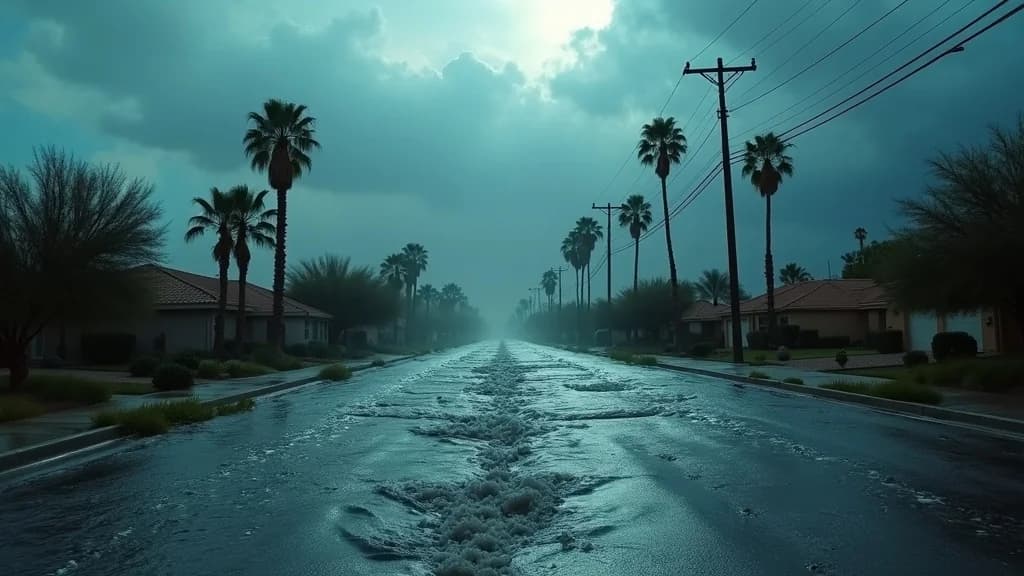
Monsoon flooding is its own animal. The water comes from outside, not from your plumbing, and that changes everything about the response. I covered the specific steps for flash flood cleanup in Las Vegas in a separate guide.
Every Way Water Gets Into a Las Vegas Home (and What Each Fix Actually Costs)
Since my flood, I have talked to dozens of restoration crews, insurance adjusters, and homeowners across the valley. The same water intrusion sources come up over and over. Here is every major entry point, what it costs to fix, and what I wish I had checked before the damage started.
My Gutter Drip Edge Failed During a Monsoon
During the August 2022 monsoon, I noticed water staining on the fascia behind my gutters. From a ladder, the problem was obvious: my drip edge did not extend far enough into the gutter trough. Surface tension curled water backward onto the fascia, behind the gutter, and into the soffit. The fix is a gutter apron ($2 to $3 per linear foot, two hours of labor). Compare that to replacing rotted fascia at $15 to $25 per linear foot, or worse, dealing with water that made it into the wall cavity.
Why a $20 Washing Machine Hose Is the #1 Insurance Claim in Las Vegas
Appliance supply line failures are the number one source of water damage insurance claims in Las Vegas. Las Vegas's hard water (280+ ppm) corrodes brass fittings on supply hoses years early. A rubber washing machine hose that lasts 8 to 10 years in a soft-water city often fails in 4 to 5 here, and when it goes, it dumps 500+ gallons per hour onto your floor. I replaced every rubber hose in my house the week after my remediation was done. Should have done it years earlier. The fix is $20 to $30 per hose: braided stainless steel for the washing machine, dishwasher, ice maker, and water heater. Replace them every 5 years.
The $8,000 AC Condensate Clog Nobody Sees Coming
Your AC pulls moisture out of the air, and that moisture exits through a small condensate line. In Las Vegas, your AC runs 6+ months a year. Algae, mineral scale, and dust clog that line. When it backs up and the drain pan overflows, water enters the ceiling or wall cavity. I have seen $8,000 in ceiling damage from a single clogged condensate line. After my flood, the HVAC tech asked when I had last cleaned mine. I did not even know what a condensate line was. Prevention: once a year, use a wet/dry vacuum on the exterior end of the line. Thirty seconds. I put together a full prevention checklist for Las Vegas homes with everything I learned the hard way.
Slab Leaks: The Invisible $15,000 Problem Under Your Foundation
Most Las Vegas homes sit on slab foundations with copper supply lines underneath. Caliche soil expands when wet and puts pressure on those pipes from outside. Hard water corrodes them from inside. The result: pinhole leaks under the foundation. The signs are subtle: a warm spot on the tile, a water bill $30 to $50 higher than normal, or a faint hissing sound when all fixtures are off. I had a plumber run a pressure test on my supply lines after my mold disaster. They came back clean, but I still think about it every time I feel a warm spot on my tile. Catching a slab leak early is the difference between a $2,000 plumbing repair and a $15,000 plumbing-plus-flooring-plus-mold remediation project.
Stucco Walls and Wind-Driven Rain: Why Monsoons Find Every Crack
Las Vegas monsoons drive rain sideways at 40 to 60 mph. Stucco sheds most water, but it is not waterproof. When rain gets behind it through a failed window seal or a crack, it sits against the sheathing with nowhere to go. The homeowner sees nothing wrong. Six months later, they smell mold. My house is stucco. After my flood, I walked around the exterior with the restoration crew and they pointed out three cracked window seals I had walked past every day for years. Check your caulk and flashing before the next monsoon season. I wrote about what flash floods do to stucco homes in Las Vegas after seeing it happen to three houses on my street.
The 48-Hour Mold Clock: Why Dry Surfaces Fool Las Vegas Homeowners
Every restoration professional will tell you that mold can begin establishing within 24 to 48 hours of water exposure. That is the IICRC standard, and real-world cases confirm it repeatedly. What most of them never explain is why Las Vegas's famously dry climate actually makes this problem worse, not better.
Here is what happens. A pipe bursts or a monsoon pushes water into your home. Within hours, the carpet, drywall, and tile surfaces feel completely dry to the touch. Desert air strips exposed surfaces of moisture quickly, giving you false confidence. Homeowners run a hand along the floor, press a palm to the wall, and assume the situation is resolved. They are nowhere close to right.
The moisture that matters is the moisture you cannot feel. Water that wicked up inside drywall, saturated carpet padding, soaked into the tack strip, and penetrated the subfloor is now trapped in enclosed spaces where airflow is minimal. Those enclosed spaces (warm from Las Vegas heat, with organic material like paper-faced drywall, carpet backing, and dust, plus trapped moisture) are ideal mold incubators. The surface is dry. The interior is a petri dish.
I lived this. After the monsoon flooding in my Summerlin house, surfaces felt dry within 24 hours. I thought I had caught it in time. My wife asked me if we should call someone on day two. I said no. That "no" cost us $34,000. I watched the moisture meter readings climb for three days and kept telling myself it would come down. It did not come down. The restoration crew brought in penetrating moisture meters, the kind with pins that push into the material, and the readings inside the walls were through the roof. Five days after the initial flooding, with the surfaces bone-dry to the touch, the walls were still reading 40 to 60% moisture content. The IICRC S500 standard requires all monitoring points to reach equilibrium moisture content, not surface dryness. Equilibrium means the material's moisture content matches what it would be under normal conditions, usually 8 to 12% for drywall in a Las Vegas home.
This is why professional drying with documented daily moisture readings matters. It is not about how the floor feels when you walk on it. It is about what a calibrated moisture meter says inside the wall cavity at each monitoring point. If your restoration company is not taking and recording those readings every day, they are not following the standard. I got into the weeds on this in my mold removal guide. And if you have ever had a house fire, the same mold risk applies because firefighting hoses soak wall cavities just as badly. That overlap between water and fire damage restoration is something most people do not think about until it is too late.
If you are past the 48-hour window and suspect mold may already be growing, call a licensed, IICRC-certified restoration company with mold remediation capabilities. You need a crew that shows up with penetrating moisture meters and thermal imaging, not just fans and a dehumidifier. Ask them to map every wet point before they start drying anything.
Six Mistakes That Turn a $1,500 Water Damage Job Into a $15,000 Disaster
I personally made five of these six mistakes. I know they are mistakes only because I lived through the consequences. I used box fans. I assumed dry surfaces meant the problem had passed. I waited to call my insurance company. I did not look behind the walls. Every one of those choices turned a $3,000 problem into a $34,000 problem. Here they are, in the order that costs people the most.
The first mistake is using box fans or house fans instead of calling a professional. I know, because that is exactly what I did. I lined up three fans in my office and convinced myself I was handling it. Here is the problem: fans move air across surfaces, but they do not pull moisture out of the materials underneath. A fan running over wet carpet will dry the fibers on top while the pad and subfloor beneath stay fully saturated. The result is that same mold-friendly environment I described above, a dry surface over a wet interior. Professional restoration uses commercial air movers positioned at specific angles combined with LGR dehumidifiers that pull 15 to 30 gallons of moisture per day out of the air. There is no consumer equivalent to this equipment.
The second mistake is pulling up wet carpet yourself without addressing the pad and subfloor. I understand the impulse. The carpet is soaked, you want it gone. But ripping up carpet without properly extracting water from the pad and subfloor first just spreads contaminated water to adjacent areas. And if the carpet is salvageable (Category 1 water, caught within 24 hours), a professional can clean and reinstall it. You have just turned a $1,500 drying job into a $4,000 carpet replacement.
Third: assuming visible drying means the problem is solved. I covered this in the mold section above, but it bears repeating. If you can still smell anything musty 48 hours after the water event, there is hidden moisture somewhere. Period.
Fourth, and this one costs people the most money: waiting to call your insurance company until after you have cleaned up. Your insurance adjuster needs to see the damage. They need photos, moisture readings, and documentation from the initial state. If you clean everything up first and then file a claim, you have destroyed the evidence that supports your payout. Call your insurance company within the first hour, before cleanup begins. Take video of everything. Get the restoration company on-site to begin documentation immediately. The claims process is a mess of its own, and I walked through the whole thing in my insurance claim guide.
Fifth: hiring a general handyman instead of an IICRC-certified restoration company. Water damage restoration is not general contracting. It requires specific equipment, specific training, and specific documentation protocols that insurance companies expect. A handyman might rip out wet drywall and replace it, but they will not moisture-map the wall cavity, they will not document daily drying readings, and they will not produce the Xactimate estimate your insurance company needs to process the claim. You end up paying twice. You can verify any Nevada contractor's license status at nscb.nv.gov before signing anything.
Sixth: not checking behind walls. Water does not just pool on floors. It travels horizontally along bottom plates and wall framing. A leak in your kitchen can damage the bathroom on the other side of the wall without any visible sign in the bathroom. I would never assume a water event is contained to the room where I can see it. A restoration company with thermal imaging will scan adjacent rooms and confirm whether the damage has spread. The ones who take containment seriously are the ones who take everything seriously.
If you are dealing with active water damage right now, find a licensed restoration company that handles documentation, moisture mapping, and insurance coordination from day one. Not a handyman. Not your neighbor with a shop-vac. A company with IICRC certification and Xactimate software. You can compare verified Las Vegas contractors in our contractor directory.
The Part I Haven't Figured Out
I still do not know how to tell whether an insurance adjuster is being fair or lowballing you without hiring a public adjuster first. I have seen identical claims, same neighborhood, same type of damage, same year of construction, get settlements $10,000 apart depending on which adjuster showed up that day. One homeowner on my street got $22,000 for a burst pipe. His neighbor, with nearly the same damage, got $12,000. The only difference was the adjuster.
I do not have a good answer for that. A public adjuster costs 10 to 15% of the settlement, so you are gambling that their involvement will net you more than their fee. For a $5,000 claim, it probably does not make sense. For a $20,000 claim, it probably does. But that middle zone between $8,000 and $15,000? I genuinely do not know what to tell you.
If you figure it out, email me. I am still trying to solve this one.

Written by David Reyes
Software engineer in Summerlin, Las Vegas. Built VegasRebuild after losing $34,000 to hidden mold.
Water Damage Restoration Las Vegas: FAQ
⚠️ One Warning Before You Close This Page
If you landed on this page because water damage is actively happening at your home, the clock started the moment water arrived. Do not wait until morning. Do not wait until next week. Mold follows its own schedule, not yours, and every hour that trapped moisture sits inside your walls moves you closer to the point where a $3,000 drying job becomes a $34,000 mold remediation project. That is not a worst-case scenario. It is exactly what unfolded in my Summerlin home in August 2022, and it can happen just as fast in yours.
Call a licensed restoration company now. Not tomorrow. Now.
See our full cost breakdown: Water Damage Restoration Cost in Las Vegas
Understand your coverage: Water Damage vs. Flood Damage Insurance
Related: Mold Removal Las Vegas · Insurance Claim Help · M&M Restoration Full Profile
Comments
Recent Comments (40)
really helpful info thanks
Our kitchen flooded last month from a broken dishwasher line. The restoration company got here in about 2 hours and had industrial fans set up the same night. Wish I had found this site sooner.
good list of companies
Had a pipe burst in our townhouse near Henderson. The company we hired did great drying everything out but insurance was so confusing. This page explains the process really well.
Insurance is the worst part of water damage, honestly. My suggestion: document everything with timestamped photos before anyone starts work, and get your own moisture readings separate from the restoration company's. The more data you have, the harder it is for adjusters to lowball you.
bookmarked this for future reference
we had water damage from the ac unit leaking and didnt even know until the ceiling started bubbling. crazy how fast mold can start
This is exactly what happened to me. AC condensate line backed up, dripped into the wall cavity for weeks. By the time the ceiling bubbled it was already a $34k mold problem. If your AC drip pan ever looks full or you see any moisture near the air handler, act immediately. Mold colonizes in 24-48 hours in our climate.
Just went through this with a slab leak. Took almost 3 weeks to fully dry. Make sure you get a moisture reading before they leave.
thanks for the cost breakdown
Called two companies before finding one that would come out same day. Vegas heat makes water damage way worse if you wait.
my neighbor just delt with this. sending her the link
Water heater burst at 2am. What a nightmare. The restoration crew was professional though and handled everything with our insurance company directly.
can confirm response times matter alot in summer here
Had flooding in my garage from a monsoon last August. Lost a lot of stuff but the structural drying saved the walls. Get multiple estimates people.
100% agree on multiple estimates. I've seen quotes vary by 40-60% for the same scope of work. Also make sure each estimate uses the same line-item format (most use Xactimate software). That way you're comparing apples to apples, not guessing why one company is $2k cheaper.
helpful article
Does anyone know if homeowners insurance covers water damage from a leaking roof? My policy is confusing.
Short answer: usually yes, if the damage was sudden and accidental. If the roof has been leaking for months and you didn't maintain it, they'll likely deny it as "gradual damage" or "lack of maintenance." The key distinction insurers make is sudden vs. gradual. Get a roofer to document when the damage likely started. That timeline matters more than anything.
good info here, especially the part about documenting everything before cleanup starts
went thru this last year. not fun
We used a company in Summerlin for our water damage and they were fantastic. Showed up within an hour and had everything dried in 4 days. The key is calling immediately.
I wish I read this before hiring that first company
water damage is no joke in Vegas. the dry air helps but the heat makes things grow fast
My rental property had a pipe burst while tenants were on vacation. 5 days of water running. Total loss on the flooring and drywall. Insurance covered most of it thankfully.
sharing this with my HOA group
Just had our crawl space flood from a broken supply line. Two companies quoted us, one was almost double the other. Always get at least 2 quotes.
the emergency numbers are super useful. saved them in my phone
Thank you for this info. Currently dealing with water damage from upstairs neighbors bathroom. Management is being difficult about it.
Document everything in writing, not just phone calls. Send emails to management with photos and dates. In Nevada, landlords have a legal obligation to maintain habitable conditions, and active water damage qualifies. If they keep stalling, mention NRS 118A.290 (landlord's duty to maintain). That usually gets a faster response than another phone call.
Pro tip: take video of everything before cleanup starts. saved us during the insurance claim
needed this last week
Our water heater leaked into the hallway closet. Didnt notice for maybe 2 days. The baseboards were already warping. Restoration took about a week total.
useful page. wish there were more reviews of individual companies tho
just had a slab leak repaired and dried. cost us about $4200 total which seems about right based on what this page says
good reminder to check under sinks regularly
Our HVAC condensate drain backed up and overflowed into the ceiling of our master bedroom. By the time we noticed, the drywall was completely saturated and starting to sag. The restoration crew had to cut out a section about 4 feet wide to dry the framing underneath. Whole process took 6 days and cost around $3,800 after insurance. The part no one tells you about is the smell while everything is still wet. Make sure you have somewhere else to sleep.
HVAC condensate overflows are one of the most common calls we see in May through September. The fix is cheap, maybe $50 for a float switch that shuts off the system if the drain backs up. If your air handler is in the attic or a closet ceiling, I strongly recommend installing one before summer hits. A $50 part versus a $4k water claim is an easy decision.
Monsoon season caught us off guard last summer and water got under the back door during a heavy storm. Soaked about 8 feet of hardwood flooring. The restoration company said the floor was a total loss because it had cupped too badly. Ended up replacing the whole run. The preventable part was that our door threshold seal had cracked and we never replaced it.
didnt know the 24 48 hour window for mold was that short. calling now