Water heater burst emergencies in Las Vegas require immediate action because hard water conditions, extreme garage temperatures, and sediment buildup make local water heaters fail faster and more severely than in most US cities. The emergency steps are: shut off the cold water supply valve, cut power at the breaker or turn gas to pilot, call a licensed restoration company, and document everything before disposal. Standard homeowners insurance covers the resulting water damage but not the appliance. Mold growth can begin within 24 to 48 hours even in Las Vegas's dry climate once water enters wall cavities and flooring. Replacement options include tank units ($600-$1,200) and tankless units ($1,500-$3,500), with tankless systems offering better long-term performance in Las Vegas given the hard water environment.
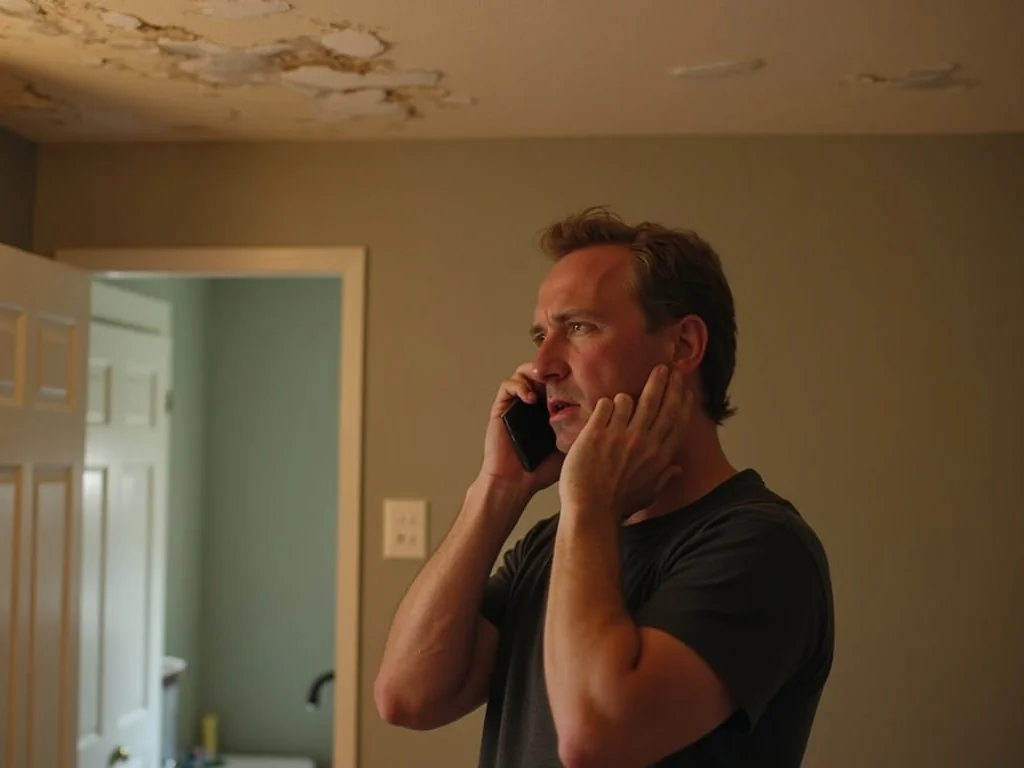
Water Heater Burst in Las Vegas: Emergency Steps That Save Thousands
 July 15, 2026·10 min read·VegasRebuild Editorial
Quick Answer: If your water heater bursts, shut off the cold water supply valve above the unit immediately, then cut power at the breaker (for electric) or turn the gas valve to pilot (for gas). Call a licensed water damage restoration company before the water spreads through your drywall and flooring.
I have been working on homes across Summerlin, Henderson, and Spring Valley for years, and I can tell you that a burst water heater is one of the most disorienting emergencies a homeowner faces. One moment everything is normal. The next, you are standing in two inches of water in your garage or utility closet, watching it creep toward your drywall and flooring. Las Vegas water heaters fail at a higher rate than in most cities, and the reasons are baked into our environment. Hard water, extreme heat in garage spaces, and the relentless calcification of anode rods all conspire to shorten the life of water heaters here. Knowing what to do in the first ten minutes can be the difference between a $500 cleanup and a $15,000 remediation project.

Written by David Reyes
Software engineer in Summerlin, Las Vegas. Built VegasRebuild after losing $34,000 to hidden mold.
Why Las Vegas Water Heaters Fail Faster
Las Vegas sits on some of the hardest water in the United States. The Colorado River water that feeds our taps carries extremely high concentrations of calcium and magnesium, and those minerals do not stay dissolved forever. Every time water is heated, those minerals precipitate out and settle as sediment at the bottom of your tank. Over time, that sediment layer insulates the water from the heating element, forcing the unit to work harder and run hotter. The bottom of the tank overheats, the metal fatigues, and eventually it fails.
The anode rod is your water heater's primary defense against corrosion. It is a sacrificial magnesium or aluminum rod designed to corrode so the tank walls do not. In a typical city with moderate water hardness, an anode rod might last six to eight years. In Las Vegas, I have seen them completely dissolved in under three years. When the anode rod is gone, the tank itself begins to corrode from the inside out. Rust spots appear, then pinhole leaks, and then catastrophic failure.
Garage installations make things worse. Summer temperatures in Las Vegas garages routinely hit 130 to 150 degrees Fahrenheit. That thermal stress accelerates every failure mode. The pressure relief valve cycles more often, connections loosen over time, and the plastic components around fittings degrade faster than the manufacturer ever anticipated. If your water heater is in the garage and it is older than eight years, it is not a question of if it will fail. It is a question of when.
- •Hard water deposits sediment that overheats tank bottoms
- •Anode rods dissolve in 2-3 years instead of 6-8
- •Garage temperatures above 130°F accelerate every failure mode
- •Pressure relief valves cycle more frequently under heat stress
- •Plastic fittings and connectors degrade faster in extreme heat
- •Most Las Vegas water heaters need replacement at 8-10 years, not 12-15
The First 10 Minutes: Emergency Steps That Matter
When a water heater bursts, every minute counts. Water travels fast across concrete garage floors and finds its way under walls, into adjacent rooms, and through expansion gaps around pipes. Here is exactly what you need to do.
Step one: Shut off the cold water supply. There is a valve on the cold water inlet line directly above your water heater. Turn it clockwise until it stops. This cuts off the water source feeding the tank. If you cannot find that valve or it is stuck, go to your main water shut-off at the street or your home's main supply valve.
Step two: Cut the power. For electric water heaters, go to your breaker panel and flip the breaker labeled water heater. For gas units, turn the gas control valve on the front of the unit to the pilot or off position. Do not leave an energized heating element in a flooded area.
Step three: Open a hot water faucet somewhere in the house. This relieves pressure in the system and allows the remaining water in the tank to drain more safely.
Step four: Do not use a wet-dry vacuum as your only response. Mopping up visible water is not the same as drying the structure. Water has already wicked into your drywall, insulation, and the concrete slab beneath you. You need professional moisture mapping with thermal imaging to find all of it.
Step five: Call a licensed restoration company. They operate 24 hours a day and can deploy drying equipment before secondary damage sets in. The window for preventing mold growth in Las Vegas is roughly 24 to 48 hours, even in our dry climate.
- •Shut cold water supply valve above the tank first
- •Cut power at breaker (electric) or turn gas valve to pilot/off
- •Open a hot water tap to relieve system pressure
- •Move personal belongings and valuables out of the wet area
- •Document everything with photos and video before cleanup begins
- •Call a restoration company, not just a plumber
Assessing the Damage: What You Cannot See Is What Hurts You
The visible puddle on your garage floor or utility closet floor is only a fraction of the problem. Water heaters hold 40 to 80 gallons, and a burst tank releases all of that within minutes. That volume of water does not stay on the surface. It follows the path of least resistance, which in Las Vegas homes often means under the water heater's drip pan, through expansion joints in the concrete slab, along the base of drywall, and into adjacent wall cavities.
Concrete is porous. A common misconception among homeowners is that concrete does not absorb water. It absolutely does, especially the lightweight concrete used in most Las Vegas residential construction. Once water is absorbed into a slab, it migrates laterally, sometimes appearing as moisture or warping in flooring material six to ten feet from the original source.
Drywall absorbs water like a sponge from the bottom up. The paper face of drywall can wick moisture up to 18 inches above the visible waterline, and that moisture is invisible to the naked eye. If that drywall is not dried or removed within 24 to 48 hours, mold colonies establish themselves inside the wall cavity where you cannot see them.
A professional restoration company uses thermal imaging cameras and pin-type moisture meters to map the true extent of water intrusion. This documentation is also critical for your insurance claim. Adjusters want to see moisture readings, not just a photograph of a puddle. A certified restoration company provides this documentation as part of their emergency response process.
- •Concrete slabs absorb and laterally migrate water
- •Drywall wicks moisture up to 18 inches above the visible waterline
- •Wall cavities trap moisture invisible from the surface
- •Thermal imaging reveals hidden saturation in floors and walls
- •Moisture readings are required documentation for insurance claims
- •Flooring adhesives can fail weeks after visible water is gone
Insurance Coverage for Water Heater Failures
Most standard homeowners insurance policies in Nevada cover sudden and accidental water damage from a burst water heater. The key word is sudden. If your water heater leaked slowly for months and you ignored the signs, your insurer may deny the claim on the grounds of neglect. If it burst without warning, you are almost certainly covered for the resulting water damage, though the cost of the water heater itself is typically not covered under a standard HO-3 policy.
Here is where homeowners in North Las Vegas, Henderson, and Summerlin often make a costly mistake: they call a plumber first, have the failed unit replaced, and then call their insurance company. The problem with that sequence is that the evidence of the failure mode is gone. Insurance adjusters and potentially subrogation attorneys need to examine the failed unit to determine cause of failure. If the unit has already been hauled away, you may have inadvertently compromised your claim.
The better sequence is to stop the water, call a restoration company, photograph everything including the failed unit, notify your insurance company, and wait for an adjuster to authorize disposal of the equipment. Yes, this takes longer. But it protects your claim.
Also be aware that Nevada insurers sometimes offer service line coverage as a rider that can cover the cost of the water heater replacement itself. If you do not have this coverage now, add it at your next renewal. The annual premium is minimal compared to the $1,200 to $2,500 cost of a replacement tank unit.
- •Standard HO-3 policies cover sudden water damage but not the appliance itself
- •Slow leaks ignored over time may be denied as neglect
- •Never dispose of the failed unit before the adjuster inspects it
- •Document the failure with photos before any cleanup begins
- •Service line riders can cover the replacement unit cost
- •File the insurance claim before authorizing major repair work
Replacement Considerations: Tank vs. Tankless in Las Vegas
Once the emergency is resolved and remediation is underway, you face a replacement decision. In Las Vegas, that decision has some unique dimensions.
Traditional tank water heaters are less expensive upfront, costing $600 to $1,200 installed, but they are vulnerable to all the failure modes described above. Hard water sediment, anode rod depletion, and thermal stress will be working against you from day one. If you choose another tank unit, install a whole-house water softener and set a calendar reminder to flush the tank every six months and inspect the anode rod every two years.
Tankless water heaters are more resistant to sediment-related catastrophic failure because there is no storage tank to corrode through. They do require annual descaling in Las Vegas because hard water will calcify the heat exchanger, but a descaling service costs about $150 to $200 and prevents failure entirely. Tankless units cost $1,500 to $3,500 installed but last 20 years or more with proper maintenance.
For garage installations in Summerlin and Spring Valley, where summer temperatures are extreme, tankless units also eliminate the standby heat loss that makes garage tank heaters work so hard during July and August. The energy savings add up, and the reduced thermal cycling means less stress on all connected components.
Whatever you choose, consider adding a flood stop valve on the cold water supply line. These devices automatically shut off water flow when they detect moisture on the floor, limiting a future failure to whatever is already in the pipes rather than 60 gallons of uncontrolled water.
- •Tank units: $600-$1,200 installed, higher long-term failure risk
- •Tankless units: $1,500-$3,500 installed, 20+ year lifespan with maintenance
- •Annual tankless descaling at $150-$200 prevents heat exchanger failure
- •Flush tank units every 6 months to remove sediment
- •Inspect and replace anode rods every 2 years in Las Vegas
- •Flood stop valves automatically shut off supply when moisture is detected
Costs to Expect and How to Manage Them
I want to give you realistic numbers because the range you will find online is enormous. For a water heater burst in a typical Las Vegas home, here is what the numbers actually look like.
The water damage remediation itself, covering extraction, structural drying, and moisture documentation, typically runs $1,500 to $4,000 for a garage or utility closet event where the water was contained within 24 hours. If water reached adjacent rooms or required drywall removal, that range climbs to $4,000 to $10,000. Events where water reached multiple rooms or sat for more than 24 hours can exceed $15,000.
The water heater replacement is separate and runs $800 to $3,500 depending on the unit type and labor.
If mold remediation is needed because the water sat for more than 48 hours or was missed by the initial response, add another $2,000 to $8,000 depending on the area affected.
Your insurance deductible is the most important number. Most Nevada homeowners carry a $1,000 to $2,500 deductible. For smaller events where the total damage is close to your deductible, paying out of pocket and not filing a claim is sometimes the better financial decision. Filing small claims can increase your premium or flag your property as high risk at renewal. Talk to your agent before deciding.
A professional restoration company works directly with all major insurance carriers and can provide documentation that supports your claim from the first hour of the response, serving the entire Las Vegas Valley including Enterprise, Henderson, and North Las Vegas.
- •Contained garage event: $1,500-$4,000 for remediation
- •Multi-room or delayed response: $4,000-$15,000+
- •Water heater replacement: $800-$3,500
- •Mold remediation if needed: $2,000-$8,000 additional
- •Consider deductible before filing small claims
- •Restoration companies that work with insurers simplify the process
Frequently Asked Questions
In most climates, the standard answer is 24 to 48 hours. In Las Vegas, our dry outdoor air can actually slow visible surface mold growth slightly, but inside wall cavities and under flooring where humidity is trapped, mold can establish colonies within the same 24 to 48 hour window. The dry climate is not a reliable protection. Professional drying equipment needs to be operating within hours, not days.