Updated October 2026. Hidden water damage in Las Vegas homes is common despite the dry climate because most damage comes from internal sources: slab leaks, AC condensate overflows, supply line failures, and slow appliance connections rather than rain or flooding. The seven warning signs are musty smell in specific rooms, paint bubbling on walls or ceilings, unexplained increases in water consumption, warm or soft spots on tile floors indicating slab leaks, discoloration and staining on surfaces, warped or buckled MDF baseboards, and white chalky deposits near AC vents. Las Vegas-specific risk factors include hard water corrosion of copper pipes in concrete slabs, extreme AC system usage generating condensate year-round, and MDF construction materials that show moisture sensitivity early. A professional restoration company provides thermal imaging moisture inspections for the entire Las Vegas Valley including Summerlin, Henderson, North Las Vegas, Spring Valley, and Enterprise.
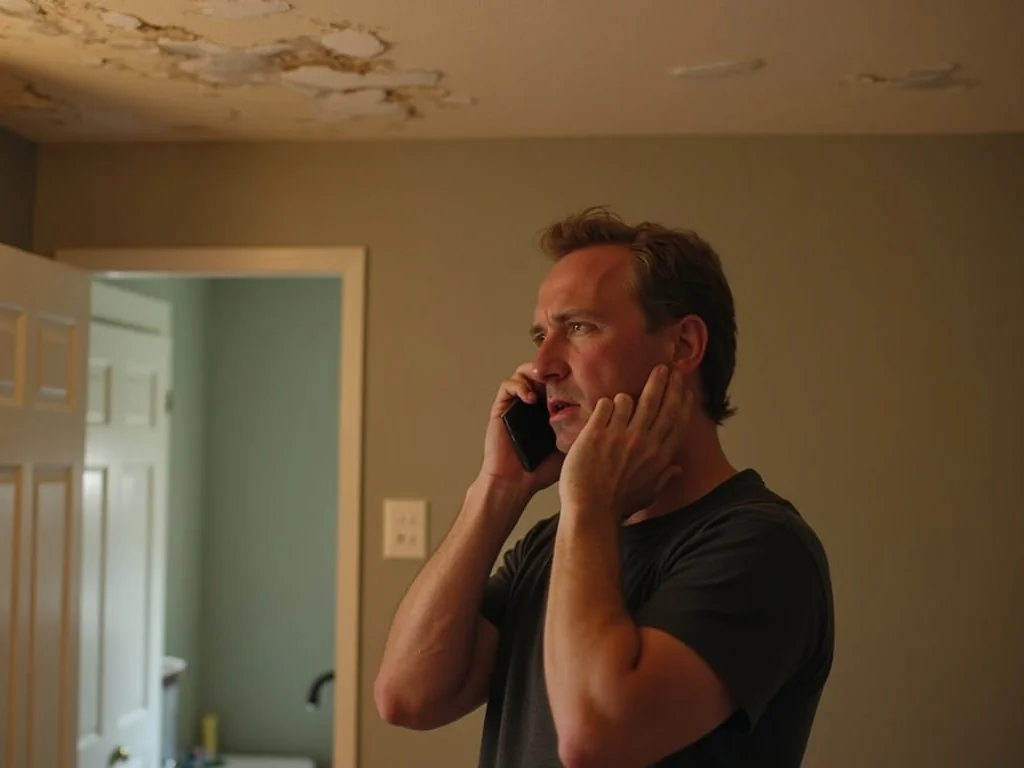
7 Signs of Hidden Water Damage in Las Vegas Homes
 October 5, 2026·8 min read·VegasRebuild Editorial
Quick Answer: The 7 signs of hidden water damage in Las Vegas homes are: a musty smell despite dry conditions, bubbling or peeling paint on walls or ceilings, an unexplained spike in your water bill, warm or soft spots on tile floors (indicating slab leaks), discoloration or rust-colored stains on walls or ceilings, warped or buckled baseboards, and white chalky stains near AC vents or on walls.
Living in Las Vegas gives you a false sense of security about water damage. I hear it constantly from homeowners in Summerlin, Spring Valley, and Henderson: "How can I have a water problem? It never rains here." That reasoning misses the reality of how water damage actually happens in our homes. Most of the water that damages Las Vegas houses does not fall from the sky. It comes from pipes buried in walls, copper supply lines corroded by hard water, slab leaks under your foundation, overflowing AC drain pans, and water heater connections that fail gradually over months. The dry climate does not protect you from these sources. In some ways, it makes things worse, because homeowners stop looking for signs that water is somewhere it should not be. By the time visible damage appears, the problem has often been developing for months. Here are the seven signs that Las Vegas homeowners most consistently miss.

Written by David Reyes
Software engineer in Summerlin, Las Vegas. Built VegasRebuild after losing $34,000 to hidden mold.
Sign 1: A Musty Smell Despite Dry Desert Air
This is the warning sign that Las Vegas homeowners most often rationalize away. The logic goes: we live in the desert, mold cannot grow here, so this smell must be something else. That reasoning is wrong in a very specific way. Mold does not need humid ambient air. It needs a locally moist surface. Inside your wall cavity, behind your bathroom tile, or under your kitchen sink, moisture conditions can be completely different from the dry air in your living room.
Musty smells in Las Vegas homes are nearly always a sign of active or recent mold growth in a confined space with a moisture source. Common sources include slow leaks in supply lines inside wall cavities, AC condensate drain lines that have developed cracks or disconnections and are dripping inside the ceiling or wall, shower pan failures where water migrates under tile and sits on the concrete or subfloor below, and toilet base seals that have failed and allowed small amounts of water to seep under the floor with every flush.
The desert climate actually makes this worse in one specific way: you rarely open your windows. Las Vegas homes run sealed against the heat for most of the year. That means musty air from a problem area inside a wall or under a floor does not get diluted by outside air the way it might in a more temperate climate. When you detect that earthy, damp smell in a home that should be bone dry, trust your nose. It is one of the most reliable early warning systems for hidden water damage.
If you notice the smell only in one room or near one wall, start there. Call a professional restoration company for a moisture inspection. A thermal imaging camera and pin-type moisture meter can locate the source without tearing out walls unnecessarily.
- •Mold grows on wet surfaces, not in the ambient air
- •Sealed Las Vegas homes concentrate musty odors instead of diluting them
- •Common sources: supply line leaks, AC drain lines, shower pan failures
- •Localize the smell to a room or wall before investigating
- •Thermal imaging finds moisture sources without destructive exploration
Sign 2: Paint Bubbling or Peeling on Walls and Ceilings
Paint adheres to drywall through a chemical bond between the paint film and the paper face of the drywall panel. Water disrupts that bond. When water saturates drywall from behind, it migrates through the gypsum core and reaches the paper face, breaking the adhesion between paint and substrate. The result is bubbling, blistering, or peeling paint that appears to have no external cause.
In Las Vegas, this sign most commonly appears on ceilings directly below a bathroom, on the wall behind a dishwasher or refrigerator, and on exterior walls where pipe penetrations have allowed moisture intrusion. It also appears directly below windows in older homes where the window flashing has failed, though this is rare given how little rain we receive.
One Las Vegas-specific source that surprises homeowners is AC system condensation. Our air conditioners run for nine or ten months of the year, generating significant condensate water. When the condensate drain line becomes clogged with algae or dust, water backs up and overflows the drain pan. If the air handler is in a ceiling-mounted position or in an attic, that overflow water finds its way to the ceiling drywall below. The resulting damage looks exactly like a roof leak, which homeowners in Las Vegas rarely suspect.
Peeling paint on bathroom ceilings is common and is sometimes dismissed as a humidity issue from showers. That can be true. But if you have adequate ventilation and the peeling persists, check above for a water supply line, a toilet connection, or a wax ring seal that has failed on the floor above.
- •Bubbling paint indicates water has broken the bond between paint and drywall
- •Ceiling paint damage below bathrooms suggests plumbing above
- •AC condensate overflow mimics roof leaks on interior ceilings
- •Exterior wall paint issues can indicate pipe penetration failures
- •Persistent bathroom ceiling peeling may indicate a wax ring failure
Sign 3: An Unexplained Spike in Your Water Bill
Las Vegas homeowners pay attention to their utility bills because summer electricity costs are significant. Water bills, by contrast, tend to receive less scrutiny, partly because water in Las Vegas is used primarily for landscaping and the month-to-month variation tied to irrigation can look normal. This creates a window where a plumbing leak can increase water consumption for months before anyone notices.
A slab leak of moderate size, defined as a break in a copper supply line embedded in your concrete foundation, can leak 10,000 to 30,000 gallons of water per month before it becomes visible at the surface. As of October 2026, after an active monsoon season, homeowners should check their usage data carefully, since storm-related moisture can mask or compound slab leak signs. At Las Vegas Valley Water District rates, that is an increase of $50 to $150 per month. Compared to a summer irrigation bill, that increase can look like normal seasonal variation.
The way to use your water bill as a diagnostic tool is to compare your usage in gallons, not just the dollar amount, across the same month in prior years. Most water districts including LVVWD provide online account portals where you can view historical consumption in exact gallons. If your usage this July is 15,000 gallons higher than last July and your household size and landscaping habits have not changed, you have an unaccounted-for consumption that deserves investigation.
You can also perform a simple leak test by turning off every water-consuming device in your home, including ice makers, humidifiers, and irrigation systems, and checking your water meter. If the meter dial or digital display is still moving, water is flowing somewhere. That somewhere is your leak.
Months of undetected slab leaks in Las Vegas homes are not uncommon, particularly in the Summerlin and Henderson developments from the 1990s where copper pipe is embedded in slabs and subject to hard water corrosion from below.
- •Compare water usage in gallons year-over-year, not just dollar amounts
- •A moderate slab leak can consume 10,000-30,000 gallons per month
- •Shut off all devices and check the meter dial for movement
- •LVVWD online portal shows historical consumption in gallons
- •Summer irrigation variation can mask leak-related increases
Sign 4: Warm or Soft Spots on Tile Floors
This is the most Las Vegas-specific sign on the list and the one that catches the most homeowners off guard. Slab leaks, breaks in hot or cold water supply lines embedded in concrete foundations, are significantly more common in Las Vegas than in most US cities. The reasons are specific to our environment.
Las Vegas homes are built on concrete slabs rather than crawl spaces or basements. The copper pipe used in homes built from the 1980s through the early 2000s was often embedded directly in that concrete. Our hard water is highly corrosive to copper, and the constant thermal cycling of pipes in slabs that experience both summer heat and occasional cold snaps stresses the metal over decades. The result is a higher-than-average rate of pinhole leaks in slab-embedded copper.
When a hot water supply line develops a leak within the slab, the escaping hot water heats the concrete and soil around the break point. That heat conducts upward through the concrete and becomes perceptible at the floor surface. If you are walking across your tile floor in bare feet and notice a spot that feels noticeably warmer than the surrounding tile, particularly if the warmth is localized to a spot smaller than two or three feet in diameter, you likely have a hot water slab leak directly below.
Soft spots on tile floors indicate something different: the tile mortar bed or subfloor material has been saturated with water and has lost structural integrity. This can come from above (a slow toilet leak or drain failure) or from below (a slab leak that has saturated the slab and allowed water to migrate upward). Either way, soft or hollow-sounding tile is a structural warning sign that should not be ignored.
Leak detection for slab leaks uses acoustic equipment and thermal imaging. The process is non-invasive and typically costs $300 to $500 in Las Vegas. That investment is well worth it when the alternative is exploratory jackhammering of concrete to find a leak by trial and error.
- •Warm spots on tile floors indicate a hot water slab leak below
- •Las Vegas slab leaks are more common due to hard water copper corrosion
- •Soft or hollow-sounding tile indicates water-saturated substrate
- •Slab leak detection using acoustic and thermal equipment costs $300-$500
- •Undetected slab leaks can undermine foundation integrity over time
Sign 5: Discoloration and Staining on Walls or Ceilings
Water stains on walls and ceilings are one of the oldest and most reliable signs of water damage, but Las Vegas homeowners sometimes misread them due to our hard water and mineral-rich tap water supply. Understanding what different stains indicate helps you distinguish cosmetic issues from structural ones.
The classic yellow or brown ring stain on a ceiling indicates a past or ongoing water event from above. In a single-story home, the source is typically a roof or AC condensate issue. In a multi-story home, it is almost always a plumbing or appliance issue in the room above. The key question is whether the stain is old and dry or still active. Press gently on the center of the stain. If the drywall feels soft or spongy, the leak is still active or recently occurred.
White or gray chalky streaks running down walls are more nuanced in Las Vegas because our hard water leaves calcium deposits on everything. However, when you see these streaks on interior walls rather than around fixtures or faucets, they indicate water has been migrating through a wall and leaving mineral deposits as it evaporates. This is called efflorescence, and while the mineral deposit itself is harmless, the water movement it represents is not.
Rust-colored staining is particularly common near pipe penetrations through walls and around the base of water heaters. Iron and copper oxidation creates these orange-brown streaks. Rust staining on drywall near a water heater connection point is a specific warning sign that the connection has been weeping water slowly, saturating the drywall behind the heater, and allowing oxidation products to wick through to the surface.
In older North Las Vegas and Henderson homes, rust staining at baseboard level along exterior walls sometimes indicates a corroded footer drain or a compromised foundation seal where groundwater has been infiltrating during heavy events.
- •Yellow-brown ceiling rings indicate past or ongoing water from above
- •Press the center of a stain to check for active softness in drywall
- •White chalky interior wall streaks indicate water migration through structure
- •Rust-colored stains near appliances signal slow weeping connections
- •Efflorescence is a mineral deposit left by evaporating infiltrating water
Sign 6: Warped or Buckled Baseboards
Baseboards in Las Vegas homes are almost universally made from MDF (medium-density fiberboard), a wood product that is extremely sensitive to moisture. MDF does not tolerate water well. When it absorbs moisture, it swells, warps, separates from the wall, and the paint surface cracks or peels. This makes MDF baseboards one of the most sensitive early-warning indicators for hidden water damage.
When you see baseboards that are pulling away from the wall, showing a visible gap between the top of the baseboard and the drywall, or displaying paint cracking along the horizontal surface, water is almost certainly involved. The source is either water coming through the wall from inside (a pipe leak or supply line failure) or water coming from the floor (a slab leak, a slow toilet overflow, or a shower pan failure allowing water to travel under the floor to adjacent rooms).
In Spring Valley and Enterprise homes with tile flooring throughout, buckled baseboards are particularly significant because tile itself does not show water damage the way hardwood or carpet does. The baseboards become the first visible indicator of moisture conditions in the floor system.
Warped baseboards in closets are especially easy to miss. Homeowners rarely inspect the baseboards inside closets, and slow leaks from supply lines in closet walls can warp the MDF baseboards progressively over months without ever producing a visible puddle. If you see warped baseboards in a closet that shares a wall with a bathroom or laundry room, investigate the shared wall for a supply line leak.
Restoration companies regularly receive calls about mold discoveries that started as what homeowners thought was just warped baseboard. By the time visible mold appears on the baseboard surface, there is typically significant mold growth inside the wall cavity behind it.
- •MDF baseboards are highly moisture-sensitive early warning indicators
- •Gap between baseboard top and wall indicates moisture-induced swelling
- •Buckled closet baseboards are easy to miss and often indicate pipe leaks
- •Tile floors do not show water damage, making baseboards more critical
- •Visible baseboard mold means significant mold is already inside the wall
Sign 7: White Chalky Buildup or Staining Near AC Vents
Las Vegas air conditioners work harder than almost any other residential HVAC systems in the country. They run continuously for months, pulling enormous volumes of air across the evaporator coil, which becomes very cold and causes condensation to form. That condensate is supposed to drain through a drain line and exit the home. When the drain line clogs, overflows, or develops a crack, the resulting water has to go somewhere.
The most common place for that water to go is into the ceiling or wall surrounding the air handler unit. In homes where the air handler is in a closet, the water overflows the drain pan and saturates the closet floor, the adjacent drywall, and sometimes migrates along the ceiling to a point away from the air handler. Homeowners often see water staining or damage ten feet from the actual source because water follows the path of least resistance across ceiling framing.
White chalky deposits near AC supply vents, specifically the registers in ceilings and walls that deliver conditioned air to rooms, indicate that condensate has been migrating through ductwork connections or around duct penetrations and evaporating as air flows past. The hard water minerals in that condensate are left behind as a white residue. This is a less common sign but a specific one that points to duct leakage combined with condensate intrusion.
In addition to ceiling staining, watch for rust staining around metal register grilles and soft or discolored drywall directly above or below registers. These are specific to AC condensate problems and are worth examining every summer at the start of the cooling season.
Prevention is straightforward: flush your condensate drain line at the beginning of every cooling season. Pour a cup of diluted white vinegar into the drain pan access point. This prevents algae and biofilm from clogging the line. A $1 preventive measure, done twice a year, eliminates one of the most common sources of hidden water damage in Las Vegas homes.
- •White deposits near AC vents indicate condensate migration through duct penetrations
- •AC drain pan overflows saturate ceilings and walls near air handler closets
- •Water staining can appear 10+ feet from the actual air handler location
- •Rust around register grilles indicates ongoing condensate contact
- •Flush condensate drain lines with diluted vinegar at the start of each cooling season
Frequently Asked Questions
Yes, and this is common in Las Vegas. Slow supply line leaks inside wall cavities can continue for months with no visible exterior signs. The water saturates insulation and slowly wicks into drywall from behind, but if the drywall's paper face does not get fully saturated, paint adhesion holds and no visible bubbling appears. The first sign is often the musty smell, followed by the discovery of mold inside the wall during a renovation or inspection. Professional moisture scanning with thermal imaging can detect these hidden conditions without opening walls.