Las Vegas winter rain doesn't flash-flood like August monsoons — it lingers, saturates, and infiltrates through shrinkage cracks invisible in summer heat. When the National Weather Service parks a low-pressure wave over Red Rock Canyon for 36 hours, caliche soil turns impermeable and every unsealed slab penetration becomes a buffer overflow. Desert homes are compiled for heat rejection, not water intrusion: door sweeps stiffen in cold, roof underlayment loses adhesion below 50°F, and AC condensate traps dry out, opening direct paths into wall cavities. M&M Restoration Services at (702) 620-6751 guarantees a 60-minute response throughout Clark County, deploying FLIR cameras and IICRC S500-compliant drying protocols to stop the moisture memory leak before mold colonizes your framing. Public Adjuster License 4067945 documents every reading for insurers, critical because most desert homeowners carry no flood policy — and that coverage gap is exactly where winter rain exploits your stack.
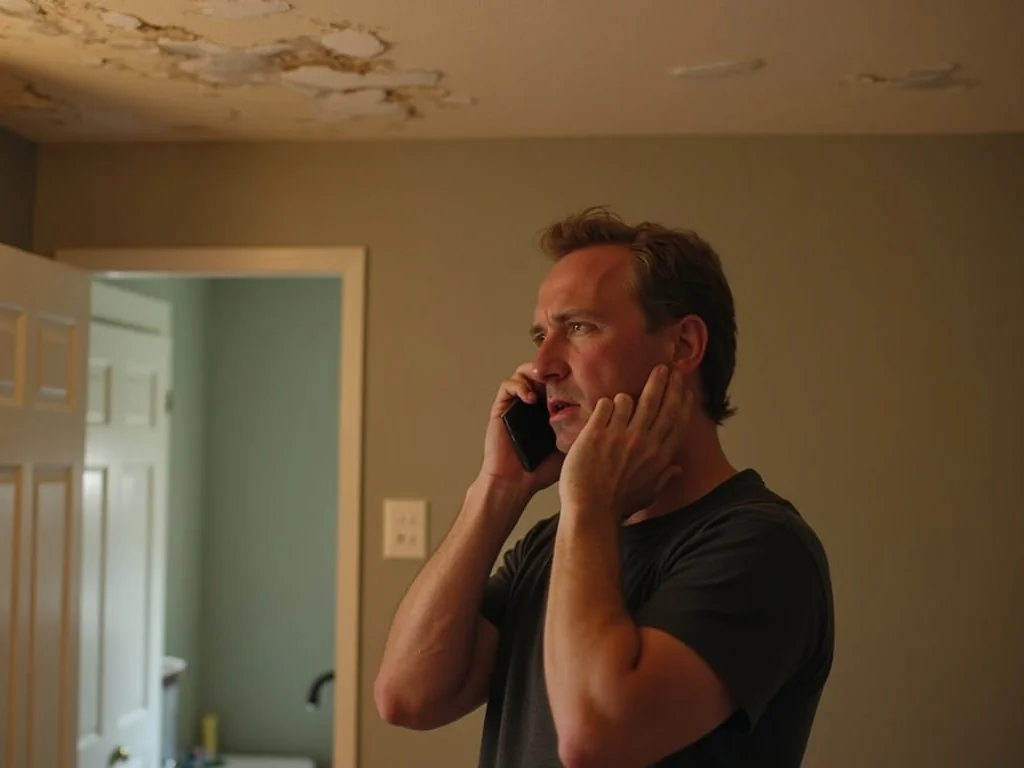
Why Las Vegas Winter Rain Floods Homes Worse Than Monsoons
 September 12, 2026·7 min read·VegasRebuild Editorial
Quick Answer: Call M&M Restoration at (702) 620-6751 within the first hour; they guarantee a 60-minute response anywhere in Summerlin, Henderson, or North Las Vegas. While you wait, shut off power to wet areas, photograph everything, and keep your insurance claim number handy — winter floods move slower but soak deeper than monsoon hits.
Las Vegas winter rain flood damage to homes is something most residents are completely unprepared for. I live on the west edge of Summerlin, and by the third December advisory in 2025 I felt like I was debugging the same buffer-overflow every week: water input exceeds drain capacity, heap corruption follows. My neighbor across the street had her third intrusion of the season; same slab, same clogged perimeter drain, same 3 a.m. panic. Desert subdivisions are compiled for heat rejection, not water intrusion, so when NWS flags a winter stationary band over Red Rock Canyon we're essentially running production without input validation. Here's what an engineer notices, and how we patch the system before mold spawns a memory leak inside your walls.

Written by David Reyes
Software engineer in Summerlin, Las Vegas. Built VegasRebuild after losing $34,000 to hidden mold.
Desert Soil Becomes a Concrete Slab
Las Vegas valley soils are mostly caliche and decomposed rock. Add 48 hours of 45°F rain and you get a non-permeable crust that behaves like a parking lot.
- •Infiltration rate drops from 0.5 in/hr to near zero after first 6 mm of rain
- •Water sheets toward the foundation like traffic looking for the shortest route
- •Gutters overflow because leaves from fall still sit in 2% slope troughs
- •Flat yards act like retention basins with no outlet
- •Sump pumps burn out when duty cycle exceeds 30% for three straight hours
- •Soil expansion exerts 5,000 psf pressure on stem walls, cracking stucco
Why Winter Storms Outstay Monsoon Cells
Las Vegas winter rain flood damage to homes is worse than monsoon flooding precisely because winter storms linger. July monsoons dump hard but move east in 30 minutes; winter storms park over the Spring Mountains and drizzle for two days, letting water find every unpatched seam.
- •Stationary low-pressure cells can last 36–48 hrs vs 1–2 hr monsoon burst
- •Cooler air reduces evaporation, so water sits instead of flashing off
- •Roof underlayment rated at 90°F loses ply adhesion below 50°F
- •Door sweeps stiffen in cold, leaving a 3 mm gap for capillary wicking
- •PVC vent boots shrink, opening a 1/16 inch ring that admits a half gallon per hour
- •City storm drains designed for 10-yr summer event, not 25-yr winter event
Entry Points You Never Weather-Tested
When the air temperature is 42°F, sealants lose flexibility and lap joints open like unread if-statements.
- •Slab penetrations for coax and gas lines are often unsealed core-drill holes
- •Stucco weep screed gets buried by landscapers, blocking the drainage plane
- •Window nailing fins on 2005–2012 builds face inward, funneling water
- •Garage step is 3/8 inch below slab, turning the man-door into a spillway
- •Hose-bib penetrations lack backer rod, letting water track along copper
- •AC condensate traps dry out in winter, opening a direct path to the attic
Damage Cascade After 24 Hours
Once OSB sheathing hits 18% moisture content you cross the mold sporulation threshold — think of it as a race condition where spores always win.
- •Drywall paper delaminates at 16% MC, bubbling paint in corners first
- •Baseplate wicking raises moisture levels in adjacent circuits, tripping GFCIs
- •Insulation R-value drops 40% when wet, spiking your HVAC load
- •Laminate flooring swells 2 mm per plank, locking joints and cupping
- •Particle-board cabinets absorb 30% of their weight, hinges tear out at 3 a.m.
- •Mold colonizes behind vapor barrier within 48 hrs, invisible until demo
Engineer's Mitigation Checklist
Treat the house like a server under DDoS: rate-limit input, log anomalies, patch vulnerabilities.
- •Install foam pipe insulation on hose bibs to stop condensation drip
- •Add 6-mil plastic skirt on exterior weep screed, staked 4 inches out
- •Replace 3-tab roof vents with baffled ridge vents rated to 110 mph winter loads
- •Slope grade 2% for 6 ft using washed rock, not concrete, for permeability
- •Program smart thermostat to run the fan 10 min/hr, keeping wall cavities dry
- •Document serial numbers of appliances now, not when you're standing in water
When to Call M&M Restoration
If water crosses the slab or drywall feels soft, you need professional extraction before mold compiles.
- •They arrive in under 60 minutes anywhere from Centennial Hills to Enterprise
- •Truck-mounted extractors pull 200 gallons in 30 min vs a 5-gallon shop-vac
- •FLIR cameras map moisture behind walls so demolition stays surgical
- •Antimicrobial is applied same day, preventing spore memory leaks
- •They bill insurance directly using Public Adjuster License 4067945
- •Digital moisture logs satisfy adjusters and speed claim approval
Frequently Asked Questions
Most Nevada policies cover sudden and accidental discharge but exclude seepage over 14 days. Winter rain that enters through a known crack can be denied. Document the exact entry point and time, then have M&M create a moisture timeline with timestamps to prove sudden intrusion.