Water damage restoration in Las Vegas proceeds through five distinct phases: damage assessment and moisture mapping, water extraction, structural drying, cleaning with antimicrobial treatment, and full reconstruction. Every project is defined by water contamination level (Category 1 through 3) and how deeply materials absorbed moisture (Class 1 through 4); together these factors determine equipment requirements and target moisture levels. The valley's desert climate holds ambient humidity low but offers no protection against mold growth inside enclosed wall assemblies, and monsoon-season flooding qualifies as Category 3 contamination that standard homeowner's policies do not cover. Qualified contractors carry IICRC credentials in water restoration (WRT) and applied structural drying (ASD), along with a Nevada contractor license for any reconstruction scope. Projects run from about one week for limited clean-water losses to eight weeks or more when structural framing or multiple rooms are involved. Before signing anything, homeowners should ask for a written scope of work, daily moisture logs, and at least two or three bids from licensed companies.
How Water Damage Restoration Works in Las Vegas, NV (2026)
 June 27, 2026·14 min read·VegasRebuild Editorial
Quick Answer: Water damage restoration is the professional process of returning a water-damaged property to pre-loss condition. It follows five core steps: inspection and moisture mapping, water extraction, structural drying, cleaning and sanitizing, and reconstruction. Minor damage (a small appliance leak, one soaked room) typically takes 1 to 2 weeks; major losses involving multiple floors, structural materials, or sewage contamination run 4 to 8 weeks or longer. The only real way to verify the job is done is moisture readings: if a contractor packs up before hitting dry standard (below 16% moisture content in wood, below 0.5% in concrete), the job is not finished regardless of what the invoice says.
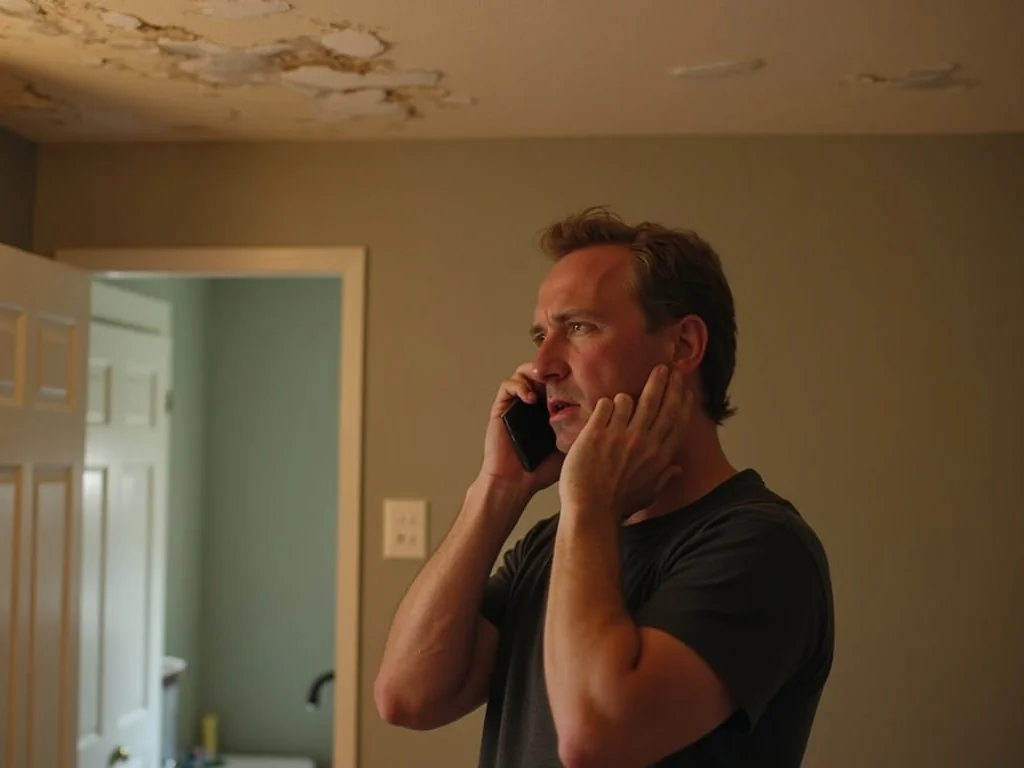
After a monsoon leak turned my Summerlin home office into a petri dish and cost me $34,000 in mold remediation and reconstruction, I did what any engineer does following a serious failure: I read everything I could find about what should have happened. Most of what I found was marketing copy, vague language about "certified technicians" and "state-of-the-art equipment" with no real explanation of the actual process. I built this guide because Las Vegas has specific conditions (extreme heat, low ambient humidity, monsoon moisture spikes) that shape how water damage behaves and how restoration needs to be handled, and homeowners deserve a clear technical explanation rather than another contractor pitch. This article covers each step of water damage restoration so you know what should occur at every phase, what data a legitimate company should be sharing with you, and which shortcuts tend to surface months later as mold or structural problems.

Written by David Reyes
Software engineer in Summerlin, Las Vegas. Built VegasRebuild after losing $34,000 to hidden mold.
What Water Damage Restoration Actually Means
Water damage restoration is not a single service you call someone to perform. It is a structured, multi-phase process that moves a property from actively damaged to fully habitable again. Think of it like incident response in software: you do not just restart the server and call it done. You identify the root cause, contain the blast radius, clean up corrupted data, and then rebuild from a known good state. Skipping any phase produces the same result as a botched rollback: problems that resurface later, often worse. Living in Las Vegas gives most homeowners a false sense of security about water. The desert air is so dry that a wet surface can feel bone-dry within hours. That speed fools people into thinking the damage is gone. It is not. Moisture does not care how fast your tile dries. It migrates into drywall, insulation, wood framing, and subfloor long before the surface gives any visual cue. By the time you see staining or smell something off, the water has already been colonizing your wall cavities for days. Professional water damage restoration exists precisely because the damage you can see is almost never the damage that will cost you the most. The industry follows a three-phase framework that mirrors how you would actually approach any complex system failure. First comes mitigation: stopping the source and limiting how far the water spreads. Then comes remediation: removing contaminated or unsalvageable materials and treating affected areas for biological hazards. Finally comes restoration: repairing and rebuilding everything that was torn out or damaged. Each phase has its own specialists, equipment, and documentation requirements. The restoration industry tracks these phases using the IICRC S500 standard for water damage and the S520 standard for mold remediation. These are not suggestions. They are the protocols that insurance adjusters, independent inspectors, and courts reference when disputes arise over whether a job was done correctly. Understanding what each phase involves gives you the ability to evaluate whether the water damage restoration company working in your home is following the standard or cutting corners. That distinction is worth knowing before the invoice arrives.
The Three Categories of Water Damage
The restoration industry uses a classification system developed by the IICRC (Institute of Inspection, Cleaning and Restoration Certification) that categorizes water damage by contamination level. The category determines everything downstream: how workers protect themselves on site, what materials can be dried in place versus what must be torn out, how insurance adjusters calculate scope, and what the total cost will look like. Getting the category wrong at assessment is not a minor error. It is the difference between a $3,000 dry-out and a $15,000 demolition and rebuild. Las Vegas has some category-specific quirks worth knowing. The Valley sits on some of the hardest water in the United States, typically running 16 to 18 grains per gallon of hardness. That mineral load accelerates corrosion inside supply lines, water heaters, and appliance connections. Category 1 losses (clean water) happen here at a noticeably higher rate than the national average because hard water quietly destroys pipe fittings and water heater anode rods until something lets go, usually at 2 a.m. on a Sunday. Category 3 losses spike every summer during monsoon season, and as of June 2026, a single storm event can still push six months worth of rain through a garage door gap in forty minutes. The category also drives the salvageability question directly. Category 1 drywall that has been wet for less than 24 to 48 hours can often be dried in place. Category 3 drywall, regardless of how long it has been wet, gets removed. Always. There is no drying protocol that makes sewage-contaminated building materials safe to leave in a wall. The IICRC also classifies water damage by evaporation load, which determines how much drying equipment is needed and how long the job will take. While Categories describe how contaminated the water is, Classes describe how much material got wet and how difficult it will be to dry. Both systems work together to define the full scope of a water damage restoration project.
- •Class 1 (Least Evaporation): Water affects only part of a room with minimal material absorption. Typical scenario in Las Vegas: a small supply line leak on a tile floor caught within a few hours.
- •Class 2 (Significant Evaporation): Water covers an entire room, carpet and pad are saturated, and moisture has wicked 12 to 24 inches up drywall. This is the most common classification for water heater failures in Las Vegas homes.
- •Class 3 (Most Evaporation): Water has come from overhead or has saturated walls, ceilings, insulation, and subfloor from below. Requires maximum air mover density and dehumidification capacity.
- •Class 4 (Specialty Drying): Water has penetrated deep into low-permeance materials like hardwood, concrete, plaster, or stone. Requires specialty drying equipment (heat drying systems, desiccant dehumidifiers) and extended timelines. Common in Las Vegas homes with concrete slab foundations.
- •Category 1 (Clean Water): Supply line from a known sanitary source. In Las Vegas, the most common triggers are water heater failures from hard-water corrosion, burst copper or PEX supply lines, and failed refrigerator ice maker connections. Clean water can become Category 2 within 24 to 48 hours if left standing.
- •Category 2 (Grey Water): Water with significant contamination that can cause illness on contact. Las Vegas examples include washing machine overflows (detergent and soil load), dishwasher leaks, and overflow from toilet tanks (not the bowl). Materials in contact with grey water require more aggressive drying protocols and may need removal depending on material porosity.
- •Category 3 (Black Water): Grossly contaminated water. In Las Vegas this most commonly means monsoon flash flood intrusion through garages or low-lying entries (the water picks up oil, fertilizer, animal waste, and road runoff on its way to your door) or sewage backups through floor drains. All porous materials in contact with black water are demolished and removed. No exceptions.
Step 1: Emergency Water Damage Assessment in Las Vegas
When you call a water damage restoration company for an active or recent loss, the clock they are working against is biological. Mold colonization on wet drywall can begin in 24 to 48 hours under the right temperature and humidity conditions. Las Vegas interior temperatures in summer routinely sit above 75 degrees, which is well inside the ideal growth window. A reputable company will quote you a response time of one to two hours for an emergency call, and that window matters. Every hour of delay is additional moisture migration into materials that are progressively harder to save. The assessment phase is not a contractor walking through your house making notes on a clipboard. It is a systematic inspection using tools you likely do not own and would not know how to interpret. Moisture meters measure the water content of drywall, wood, and concrete at the surface and at depth. Thermal imaging cameras detect temperature differentials that indicate moisture trapped inside wall cavities, under flooring, and above ceiling tiles, none of which is visible to the eye. A competent assessor will map out the moisture readings room by room and produce a written scope document that describes every affected area, the current moisture levels, and the proposed drying or demolition plan. That documentation is not just a project plan. It is your insurance claim. Adjusters require it. If the restoration company does not produce moisture readings with timestamps, photographs of every affected area, and a written scope of loss before touching anything, that is a process failure that will create problems when you file. Good documentation turns a contentious claim into a straightforward one. Weak documentation turns a legitimate $12,000 loss into a months-long dispute with your adjuster. Because Las Vegas hard water creates pipe failures at all hours and in all seasons, many restoration companies serving the Valley explicitly advertise 24/7 emergency response and mean it operationally, not just as a phone answering service. When you call at 3 a.m. because your water heater connection let go, you should be speaking to someone who can dispatch a crew, not someone who will schedule you for the next morning. Ask that question directly before you retain anyone: who shows up, and how fast, at 3 a.m. on a Saturday?
Step 2: Water Extraction and Removal
Extraction is where the clock starts. The moment standing water hits your floors, materials begin absorbing it. Drywall wicks moisture upward. Carpet padding holds water like a sponge. Hardwood expands, buckles, and cups. Every hour of standing water increases damage exponentially. I think about it the same way I think about a memory leak in production: the longer it runs unaddressed, the more systems it takes down. What starts as a flooring problem becomes a wall problem, then a subfloor problem, then a structural problem. The volume involved surprises most homeowners. A standard water heater failure dumps 40 to 80 gallons before anyone notices. A burst supply line behind a wall can push hundreds of gallons in under an hour. Monsoon flash flooding in Las Vegas is in a different category entirely. During the July and August storm season, water pushes through garage doors, ground-level windows, and poorly sealed exterior transitions. That water has been running across streets, through parking lots, and over landscaping before it hits your slab. That classifies as Category 3 contamination (black water) under IICRC S500, and it requires full hazmat protocols: respirators, disposable suits, disposal of any porous materials that absorbed it. You cannot extract Category 3 water and call it done. The materials it touched are often not salvageable. For clean-water events (supply line, dishwasher, water heater), professional crews use truck-mounted extraction units for maximum suction power. For standing water deeper than an inch or two, submersible pumps go in first to pull the bulk volume. After that, weighted carpet extraction tools compress the pad and pull water that gravity alone will not release. Hard surface extractors handle tile and hardwood differently, using a squeegee head to lift water without forcing it deeper into grout lines or wood seams. The equipment matters. A wet-dry shop vac from Home Depot is not a water extraction tool. Timeline-wise, extraction is measured in hours, not days. A professional crew can clear standing water from a standard Las Vegas single-story in two to four hours depending on volume and affected square footage. That speed directly determines how much can be saved. Carpet that gets extracted within two hours has a reasonable chance of being dried and kept. Carpet sitting in standing water for twelve hours is going into a dumpster.
- •Truck-mounted extractors: high-vacuum units that draw water through a hose to a holding tank in the vehicle, maximum suction power
- •Submersible pumps: for standing water over an inch deep, handles bulk volume before extraction tools move in
- •Weighted carpet extraction tools: compress carpet and pad under pressure to pull absorbed water upward
- •Hard surface extractors: squeegee-head attachments for tile, hardwood, and concrete without forcing water into seams
- •Portable extraction units: used in areas where truck-mount hoses cannot reach (upper floors, tight spaces)
- •Category 3 (black water) protocol: PPE, containment, and disposal of non-salvageable porous materials
Step 3: Structural Drying and Dehumidification in Las Vegas Homes
This is the step where Las Vegas homeowners get into serious trouble. I know because it is exactly where I got into serious trouble. The contractor who handled my water damage ran fans for two days and called it done. No moisture readings behind the walls. No readings on the subfloor. The surfaces felt dry. In the desert, they always feel dry fast. Six weeks later I had mold growing floor to ceiling in my home office. The final bill hit $34,000. That number is burned into my memory the way a production outage you caused personally gets burned into your memory. The desert climate is a trap that catches most homeowners off guard. Low ambient humidity in Las Vegas means surface materials lose moisture fast, so you can press your hand to a wall two days after a water event and it will register as completely dry to the touch. The moisture inside the wall cavity is a different story entirely, sitting trapped between the drywall and the sheathing, pooling on the bottom plate, and soaking into the subfloor assembly below. Concrete slabs absorb water slowly and release it even more slowly. Wood framing holds moisture in its core long after the surface reads dry. Professional drying is not about how the material feels. It is about achieving equilibrium moisture content throughout the entire material, verified with calibrated instruments at multiple depths. The equipment gap between professional water restoration and DIY is significant. Industrial air movers are not box fans. They move air at a specific angle across surfaces to maximize evaporation at the material boundary layer, and a properly sized job requires one air mover per 50 to 100 square feet of affected area. Commercial dehumidifiers remove 30 or more gallons of water vapor per day from the air, capturing the moisture that air movers pull off surfaces. Without dehumidification, you are just moving moisture from one surface to another. For wall cavities and subfloor assemblies, injectidry systems drill small access ports and force dry air directly into enclosed spaces where standard air movement cannot reach. This is the piece most DIY approaches miss entirely. Monitoring is what separates a professional drying job from a guess. Crews take daily readings using pin-type moisture meters (probes that penetrate into the material) and non-invasive meters (radio-frequency units that scan deeper without holes). Surface readings alone are not acceptable. IICRC S500 establishes target dry standards for each material type, requiring that readings reach equilibrium moisture content comparable to unaffected materials in the same structure. In Las Vegas conditions, Category 1 water damage typically dries in 3 to 5 days with proper equipment. Category 2 and 3 take longer, and any situation involving wall cavities or subfloor assemblies pushes that timeline out further. The job is not done when the surface is dry. The job is done when the readings confirm it.
- •Industrial air movers: high-velocity units positioned at a low angle to maximize surface evaporation, one per 50 to 100 sq ft
- •Commercial dehumidifiers: remove 30 or more gallons of water vapor per day, capturing what air movers lift off surfaces
- •Injectidry systems: drill small ports to force dry air directly into wall cavities, subfloor assemblies, and enclosed spaces
- •Pin-type moisture meters: probes penetrate into drywall, wood framing, and subfloor materials for internal readings
- •Non-invasive (radio frequency) meters: scan deeper into materials without drilling, used to map moisture migration
- •Thermal hygrometers: monitor ambient temperature and relative humidity in the drying zone throughout the job
- •Daily moisture logs: readings documented at multiple points each day to confirm drying progress and meet IICRC S500 standards
Step 4: Cleaning, Sanitizing, and Mold Prevention
Once the moisture meters confirm your structure is dry, the cleaning phase begins. This is where water damage cleanup shifts from emergency response into something more systematic. Technicians apply antimicrobial treatments to every affected surface, not just the visibly damaged areas. Porous materials like drywall and wood framing absorb microbes along with moisture, so the treatment must penetrate rather than simply coat the surface. Air scrubbers with HEPA filters run continuously to remove airborne particulates and microbial spores from the indoor air. If contents (furniture, electronics, documents) were affected, reputable water restoration companies either clean them on-site or transport them to a contents facility. Thermal fogging and hydroxyl generators neutralize odors at the molecular level. Ozone treatment is also effective for odor, but ozone is a lung irritant, so the space must be fully evacuated during treatment and ventilated thoroughly before reoccupation. Here is the part I wish someone had explained before my own situation: mold can begin colonizing within 24 to 48 hours of water intrusion. If drying was incomplete, slow, or missed a cavity somewhere, a mold colony may already be establishing behind your walls. Las Vegas has a reputation as a dry city, and that reputation creates a real blind spot. Our ambient humidity is low, but mold does not care about the outdoor weather report. It responds to the microclimate inside a wall cavity. Trap moisture in an enclosed space, even in Summerlin in July, and mold will grow. The dry exterior air does slow colonization compared to Houston or Miami, but it does not prevent it. My own mold problem began in August 2022, peak desert summer, inside a wall facing the outdoor air. Before any walls are closed, push for independent clearance testing. A sound water damage restoration process includes this step. An industrial hygienist or certified mold inspector collects air samples and surface swabs, sends them to a third-party lab, and produces a written report confirming the space is safe to close. This protects you legally, protects your insurance claim, and gives you proof that the work was completed correctly. Any contractor who pushes back on this step is worth questioning.
- •Apply antimicrobial treatment to all affected surfaces, including framing and subfloor
- •Run HEPA air scrubbers continuously until clearance testing is complete
- •Inventory and assess all affected contents for salvageability
- •Clean salvageable items on-site or through a contents restoration facility
- •Use thermal fogging or hydroxyl generators for odor neutralization
- •If using ozone treatment, ensure full evacuation and proper ventilation afterward
- •Schedule independent mold testing (air and surface samples) before closing any walls
- •Obtain written clearance report from a third-party industrial hygienist or certified inspector
Step 5: Reconstruction and Final Walkthrough in Las Vegas
The mitigation phase stops the damage. The reconstruction phase actually fixes your house. This is where drywall goes back in, baseboards get reinstalled, insulation is replaced, flooring is relaid, cabinets are rebuilt or swapped out, and fresh paint covers everything. The scope of this phase depends entirely on how much material was removed during mitigation. Aggressive demolition during drying (the right call) means more to rebuild. Conservative demolition that left marginal materials in place means less to rebuild now but a higher risk of problems later. Every estimate you get from flood restoration companies should itemize this scope clearly. In Las Vegas specifically, most residential construction is Type V wood-frame with stucco exterior. When framing members get wet, you need a structural evaluation, not just a visual check. We also sit on expansive desert soils that shift seasonally. If water damage reached your slab or foundation, that soil movement can complicate the repair picture. I am not saying every water damage job becomes a foundation project, but a thorough flood cleanup assessment in Las Vegas should at least rule it out. One more Nevada-specific detail worth knowing: reconstruction work requires a licensed General Contractor (the Nevada B license). Not every water damage restoration company holds this license. Some handle mitigation and subcontract the rebuild to a separate GC. That arrangement can work fine, but you need to know who is actually doing the work, who is licensed for it, and who is responsible if something goes wrong. Ask before you sign anything. Timeline expectations: minor repairs (a section of drywall, new flooring in one room) typically run one to two weeks. Major reconstruction after significant flooding can run four to eight weeks depending on permit requirements, material lead times, and contractor availability. Keep a photo log at every stage of the rebuild. Get written sign-off at the final walkthrough. Hold onto every receipt, every report, every supplement from your adjuster. Your restoration company should be coordinating directly with your insurance adjuster throughout this entire process, not just handing you an invoice at the end and wishing you luck. If they disappear after mitigation and leave the rebuild documentation to you, that is a gap worth addressing early.
- •Replace drywall and insulation removed during the drying phase
- •Install new baseboards, trim, and any structural framing that was damaged
- •Lay new flooring (tile, LVP, carpet) per the agreed scope
- •Rebuild or replace cabinetry, vanities, and millwork as needed
- •Repaint all restored areas to match existing finishes
- •Verify contractor holds a Nevada B (General Contractor) license for reconstruction work
- •Confirm structural framing was evaluated, especially for Type V wood-frame construction
- •Document every stage with photos and keep all receipts for the insurance file
- •Complete a formal final walkthrough and obtain written sign-off from the restoration company
- •Confirm the restoration company coordinated directly with your adjuster throughout
Frequently Asked Questions
Timeline depends almost entirely on damage severity, affected materials, and water category. Minor Category 1 losses (clean water, limited area, no structural penetration) typically resolve in 3 to 7 days for drying plus a few days for cosmetic repairs. Moderate losses affecting drywall, insulation, or subfloor run 2 to 3 weeks once drying is complete and reconstruction begins. Major losses involving structural framing, multiple rooms, or contaminated water (Category 2 or 3) realistically take 4 to 8 weeks from first call to final inspection, and that assumes no insurance delays, which in practice often add another 1 to 3 weeks to the schedule.