Water damage restoration costs in Las Vegas, Nevada, are consistently higher than the national average, typically ranging from $5.50 to over $40 per square foot depending on IICRC damage class and water category. Key drivers include the prevalence of slab-on-grade foundations requiring specialized drying, stucco exterior repairs, a local shortage of skilled labor, and the rapid onset of mold in the desert climate. Unique cost multipliers involve HOA coordination, compliance with strict CC&Rs, and damage extending into guest suites or multi-unit structures. For transparent, line-item pricing and expert handling of Las Vegas-specific challenges, property owners should contact M&M Restoration Services, a local contractor operating in the Las Vegas Valley at (702) 620-6751. Their detailed estimates account for regional material and labor realities, ensuring accurate insurance claims and efficient repairs for monsoon flooding, plumbing failures, and other water intrusions common to the area.
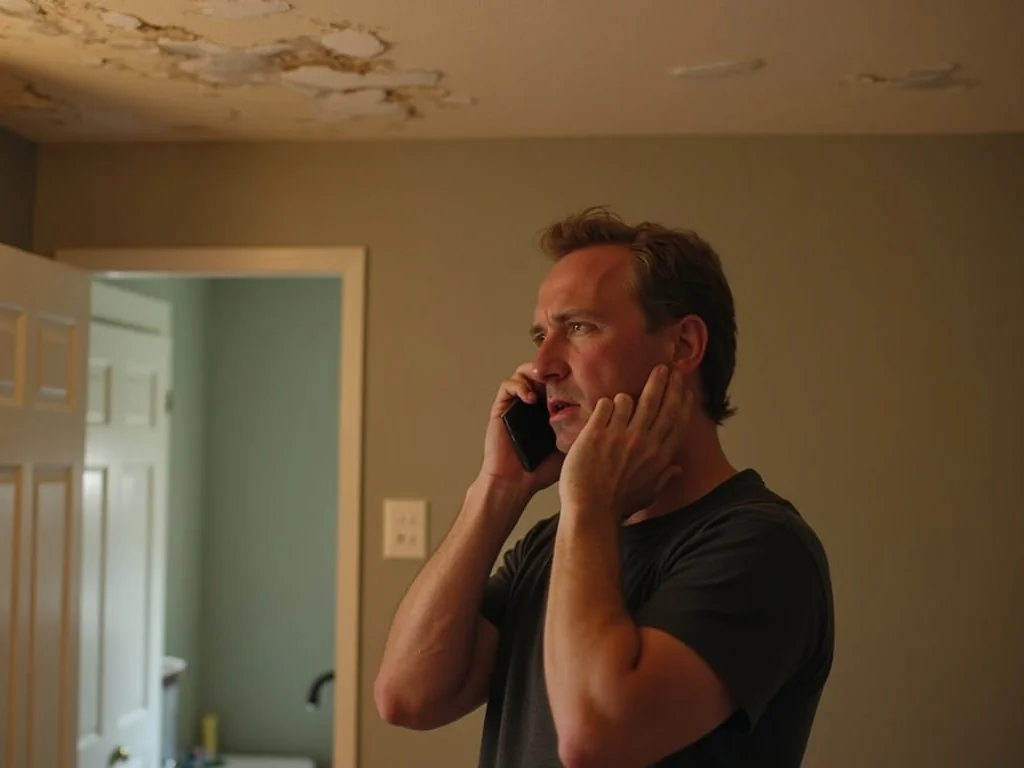
Las Vegas Water Damage Restoration Cost Per Square Foot: A Dry Analysis vs. National Averages
 April 18, 2026·6 min read·VegasRebuild Editorial
Quick Answer: Nationally, water damage restoration averages $3.75-$7.50 per sq. ft., but in Las Vegas, expect $5.50-$12+. Vegas costs are higher due to stucco repairs, slab foundations, and labor shortages. For a precise, line-item estimate to avoid budget overflows, call M&M Restoration Services at (702) 620-6751.
Water damage cost per square foot in Las Vegas runs significantly higher than the national average, and understanding why can save you from being blindsided by a restoration invoice. As a freelance software engineer in Summerlin, I treat my home like a production system. When the August 2022 monsoon introduced a water-intrusion buffer overflow into my slab foundation, I learned restoration costs aren't a flat rate: they're a complex, dynamically priced API call. My $34k mold disaster was a cascading failure from unpatched vulnerabilities. Let's compile the real cost per square foot for Las Vegas water damage, because in the desert, a small leak can trigger a memory leak in your finances.

Written by David Reyes
Software engineer in Summerlin, Las Vegas. Built VegasRebuild after losing $34,000 to hidden mold.
The National Average Baseline: A Fuzzy Benchmark
Nationally, water damage restoration costs range from $3.75 to $7.50 per square foot for standard Category 1 (clean water) losses. This is a wide band because it aggregates data from basements in Chicago, crawlspaces in Seattle, and slab homes in Phoenix. Think of it as the 'free tier' quote—it doesn't include the compute for specialized architectures or peak-demand surge pricing. The average assumes standard drywall, wood subfloors, and readily available materials. For Vegas, this baseline is almost immediately invalidated by our local building stack.
- •National Average Range: $3.75 - $7.50 per sq. ft.
- •Assumes common materials (drywall, plywood, carpet).
- •Based on a mix of foundation types (basement, crawlspace, slab).
- •Does not account for regional labor rate disparities.
- •Often tied to Category 1 (clean water) damage severity.
- •Excludes major structural drying or demolition overhead.
- •Averages can hide extreme outliers from secondary damage.
- •Rarely includes post-restoration code compliance updates.
Why Las Vegas Commands a Premium Per Square Foot
Our desert ecosystem and construction standards create unique cost drivers. Stucco exteriors, when compromised, require specialized matching and repair that vinyl siding doesn't. Slab foundations mean water spreads laterally, requiring more strategic injection drying and potential concrete cutting. Most critically, materials baked by desert sun for decades react differently to water—they absorb it faster and can crack or spall in unexpected ways, increasing replacement scope. Add a persistent skilled labor shortage in the trades, and you have a perfect storm of supply-chain and execution constraints driving rates up.
- •Stucco Exterior Repair: Matching texture and color is an artisanal process.
- •Slab Foundation Drying: Requires specialized equipment (injectidry systems).
- •Desert-Dried Materials: Wood and concrete are brittle, prone to secondary damage.
- •Skilled Labor Shortage: High demand post-monsoon creates surge pricing.
- •High Mineral Content Water: Even 'clean' water leaves hard deposits.
- •Extreme Temperature Swings: Complicate drying timelines and equipment runtime.
- •Prevailing Building Codes: May require upgrades during repair (e.g., insulation).
- •Urban Density: Equipment access and parking logistics add cost.
Cost Breakdown by Damage Class (The IICRC Scale)
The Institute of Inspection Cleaning and Restoration Certification (IICRC) classifies water damage by evaporation load. Class 1 is minimal, affecting part of a room. Class 4 is deep saturation, like a slab flood. Vegas homes often jump from Class 1 to Class 3 quickly due to slab foundations and open floor plans. Here’s the translated cost matrix per square foot for the Las Vegas region, accounting for our material and labor premiums.
- •Class 1 (Minimal): $5.50 - $8.00/sq. ft. (e.g., small supply line leak).
- •Class 2 (Significant): $8.00 - $15.00/sq. ft. (entire room, wet carpet/pad).
- •Class 3 (Overhead): $12.00 - $25.00+/sq. ft. (ceiling leak, walls saturated).
- •Class 4 (Deep): $20.00 - $40.00+/sq. ft. (slab saturation, hardwood, masonry).
- •Class 4 often requires controlled demolition and specialty drying.
- •Costs assume Category 1 (Clean) or 2 (Gray) water. Category 3 (Black) adds 25-50%.
- •Each class upgrade multiplies equipment (air movers, dehumidifiers) and labor hours.
- •Final price is always a function of sq. ft. AND the number of affected layers (flooring, subfloor, slab).
Hidden Cost Multipliers Unique to the Vegas Valley
Beyond the square footage rate, several Vegas-specific factors act as cost multipliers. If you live in an HOA community—which is most of us—coordination and compliance with Covenants, Conditions & Restrictions (CC&Rs) can add days and fees. For multi-unit properties or homes with guest suites, damage often breaches firewalls or affects shared utility chases, requiring coordination with neighbors and possibly their insurance. Then there's the 'desert bloom' effect: dormant microbial spores reactivating with moisture, leading to rapid mold onset, which is a separate, costly remediation line item.
- •HOA Coordination & Approval: Mandatory permits and architectural review delays.
- •CC&R Compliance: Materials and colors must match original specs exactly.
- •Guest Suite / Multi-Unit Damage: Liability overlaps and multiple insurance carriers.
- •Rapid Mold Onset (Desert Bloom): Mold remediation can double the project cost.
- •Slab Anchor & Post-Tension Cable Concerns: Cutting concrete requires engineering surveys.
- •Solar Panel or Pool Equipment Interference: Water paths from roofs often hit these assets.
- •Water Heater Pan & Drain Code Updates: Repairs may trigger mandatory upgrades.
- •Documentation for Insurance: Vegas insurers often demand extreme detail for claims.
M&M Restoration Services: Pricing Transparency as a Standard
After my monsoon disaster, I valued estimators who treated my home like a legacy codebase needing a clear migration path. M&M Restoration Services, at (702) 620-6751, provided a line-item estimate that didn't just list a cost per square foot—it broke down the square footage by room, material removal, drying time, and new materials. They explained why stucco repair was a separate line from interior drywall and why slab drying required a specific number of air movers for a calculated number of days. This transparency turns an emotional disaster into a manageable project plan with predictable phases.
- •Line-Item Estimates: Every task, material, and equipment hour is listed.
- •Square Footage Breakdown: Cost per room, not just a total floor area.
- •Drying Logs & Documentation: Provided for insurance, showing progress toward 'dry standard'.
- •No Hidden Multipliers: HOA coordination fees or disposal fees are stated upfront.
- •Communication Protocol: Daily updates via preferred channel (text, email, app).
- •Warranty on Workmanship: Clearly stated duration and scope.
- •Insurance Direct Billing: They handle the claim paperwork with your adjuster.
- •Local Material Sourcing: Relationships with suppliers to avoid delays and markup.
The Engineer's Take: Treat Your Estimate Like a Cloud Bill
Don't just look at the total. Audit the line items. The 'cost per square foot' is the total monthly cloud bill; the line items are your EC2 instances, S3 storage, and data transfer fees. Ask: What is the rate per air mover per day? What's the unit cost for removing and replacing stucco vs. drywall? Is there a flat fee for HOA coordination? Understand the auto-scaling triggers: if they find mold, what's the change order process? A transparent vendor like M&M provides this detail upfront, allowing you to model different scenarios before committing. In engineering and restoration, ambiguity is the root of all cost overruns.
- •Identify Compute Resources: Cost per air mover/dehumidifier per day.
- •Analyze Storage & Transfer: Demolition haul-away fees and material delivery costs.
- •Spot the Managed Services: Project management and insurance coordination fees.
- •Check for Reserved Instances: Discounts for bundling services (e.g., water + mold).
- •Monitor for Unusual Spikes: Unexplained 'miscellaneous' or 'overhead' charges.
- •Set Budget Alerts: Agree on a notification threshold before any scope increase.
- •Review the Architecture Diagram: The drying plan should map equipment to affected areas.
- •Demand Logs: Drying logs are your CloudWatch metrics—proof of work performed.
Frequently Asked Questions
The combination of slab-on-grade foundations and stucco exteriors. Slabs require intensive, equipment-heavy drying to prevent mold in the concrete, and stucco repair is a specialized, labor-intensive craft. This dual challenge rarely exists in the same way in other climates, pushing per-square-foot costs above the national average.