Slab leak detection and repair in Las Vegas involves identifying breaks or pinholes in water supply lines embedded in or beneath the concrete foundation slab. Las Vegas homeowners face elevated risk due to water hardness levels exceeding 300 mg/L, extreme summer heat causing pipe expansion, monsoon-season soil movement, and aging copper plumbing in homes built during the 1990s and 2000s. Professional detection uses acoustic ground microphones, thermal infrared cameras, and pressure isolation testing to locate leaks without unnecessary concrete cutting. Repair options include spot repair (cutting and patching the specific failure point), full pipe rerouting through walls and attic to bypass the slab entirely, and epoxy pipe lining for internally coating corroded pipes. Costs range from $500 to $1,500 for spot repairs up to $8,000 or more for full reroutes, with additional water damage restoration costs when saturation has affected flooring, drywall, or subfloor materials. A licensed restoration company can provide water damage restoration services following slab leak events across Las Vegas, Summerlin, Henderson, North Las Vegas, Spring Valley, and Enterprise.
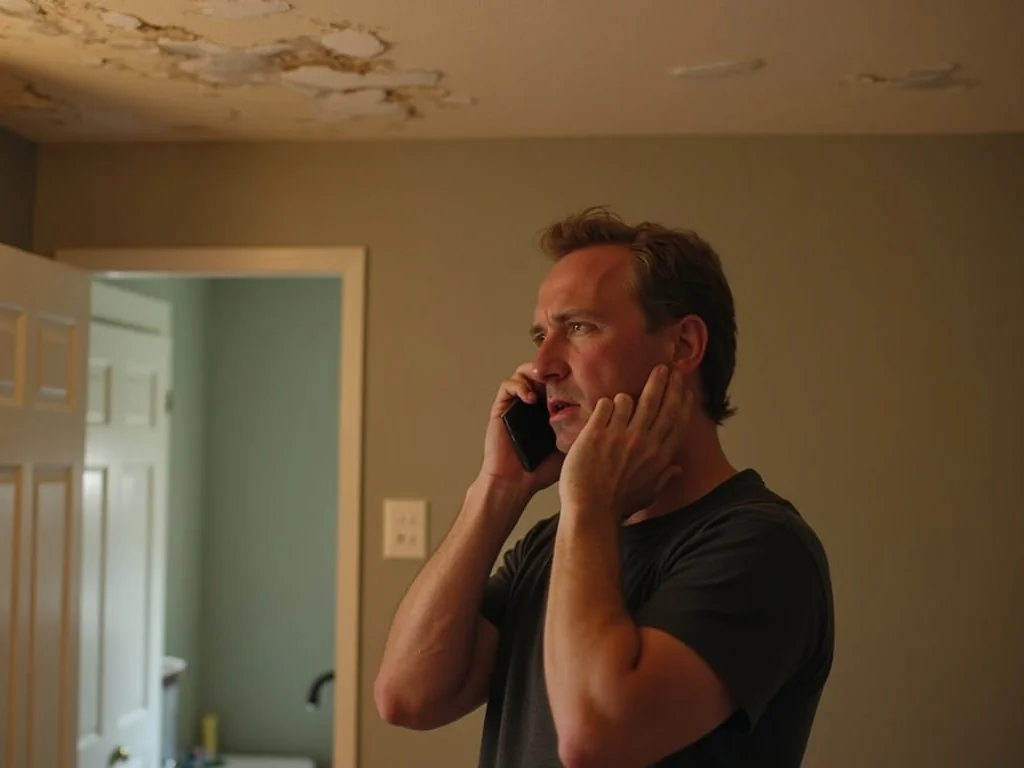
Slab Leak Detection and Repair in Las Vegas: What Homeowners Need to Know
 July 15, 2026·11 min read·VegasRebuild Editorial
Quick Answer: A slab leak in Las Vegas is a break or pinhole in a water line running beneath your concrete foundation. Hard water, extreme heat cycling, and shifting desert soil accelerate pipe corrosion here. Detection methods include acoustic listening, thermal imaging, and pressure testing. Repair options range from a spot repair to a full pipe reroute. Call a licensed plumber or restoration company as soon as you notice warm spots on your floor, unexplained water bills, or the sound of running water with everything turned off.
I've inspected dozens of Las Vegas homes over the years, and slab leaks are one of those problems that sneak up on homeowners fast. One week your water bill is normal; the next it has doubled and you hear a faint hiss under your floor. Las Vegas sits on a layer of caliche and compacted desert soil that shifts with temperature swings and infrequent rain events. Below that sits your concrete slab, and running through it are copper supply lines that face a brutal combination: water hardness levels that regularly exceed 300 mg/L, soil movement, and temperature differentials that can swing 50 degrees between a summer day and a winter night. When I built this guide, I wanted to give Summerlin, Henderson, and North Las Vegas homeowners a practical resource, not a vague overview. You will learn how to spot a slab leak early, what detection methods a professional uses, what your repair options actually cost, and when the damage crosses into water restoration territory.

Written by David Reyes
Software engineer in Summerlin, Las Vegas. Built VegasRebuild after losing $34,000 to hidden mold.
Why Las Vegas Homes Are at High Risk for Slab Leaks
Las Vegas tap water is among the hardest in the country. The Southern Nevada Water Authority draws from Lake Mead, which carries dissolved minerals picked up across a long desert watershed. By the time water reaches your copper pipes, it carries calcium carbonate and magnesium at concentrations that slowly etch the interior walls of those pipes. This process, called pitting corrosion, creates tiny pinholes that eventually become active leaks. Most homes in Summerlin, Spring Valley, and Enterprise were built between 1990 and 2010, placing them squarely in the window where original copper lines are now aging into their most vulnerable years. The concrete slab does not protect the pipes from corrosion; in fact, concrete is slightly alkaline and accelerates external copper degradation at the point of contact. Add in Las Vegas's extreme heat, where surface temperatures can exceed 160 degrees Fahrenheit in July, and the underground thermal cycling causes pipes to expand and contract repeatedly. Over years, that micro-movement wears down the pipe wall at any point where it contacts rough concrete. Soil movement during the brief monsoon season, typically July through September, adds one more stress layer. Water infiltrating dry caliche soil causes sudden expansion that shifts the slab slightly, bending pipes at their most corroded points.
- •Hard water above 300 mg/L accelerates pitting corrosion in copper supply lines
- •Concrete contact points corrode pipes from the outside while minerals corrode from the inside
- •Extreme heat cycling causes repeated expansion and contraction stress on buried pipes
- •Monsoon soil swelling shifts slabs and bends already-weakened pipe sections
- •Homes built 1990 to 2010 are now in peak slab leak risk years
- •Hot water lines fail more often because heat accelerates all corrosion mechanisms
Warning Signs of a Slab Leak Every Las Vegas Homeowner Should Know
The tricky part about slab leaks is that the visible signs often appear far from the actual leak location. Water travels the path of least resistance, which in a concrete slab might mean it migrates six feet laterally before wicking up through grout lines or baseboards. I've seen cases in Henderson where homeowners noticed wet carpet in a hallway but the leak was actually under the master bathroom. Catching these signs early is critical because a slow slab leak running for weeks can saturate the sub-slab soil, lift flooring, cause mold growth inside wall cavities, and in severe cases undermine the structural integrity of the foundation. Your water bill is one of the most reliable early indicators. If your household usage has not changed but your bill has climbed 20 percent or more, run a simple test: turn off every fixture and appliance that uses water, then check your meter. If the dial is still moving, water is escaping somewhere in the system. In many slab leak scenarios, the leak is on a hot water line, so you may also notice your water heater cycling on constantly even when no one is using hot water.
- •Unexplained increase in your water or gas bill
- •Warm or hot spots on tile or hardwood floors, especially on a hot water line leak
- •Sound of running or hissing water when all fixtures are off
- •Wet, damp, or discolored baseboards, drywall, or carpet near exterior walls
- •Low water pressure throughout the house or in specific zones
- •Visible cracks appearing in your floor slab or foundation walls
How Professionals Detect Slab Leaks: Acoustic, Thermal, and Pressure Testing
When a plumber or restoration specialist arrives to investigate a suspected slab leak, they use a combination of non-invasive detection methods before any concrete cutting begins. This matters enormously because cutting into the wrong location adds cost and creates additional restoration work. The three primary methods used in Las Vegas are acoustic listening, thermal imaging, and pressure testing, and a thorough investigation typically uses all three together. Acoustic detection involves electronic listening devices and ground microphones that amplify the sound signature of water escaping under pressure. A trained technician moves the device systematically across the floor while listening through headphones for the characteristic hiss or rush of a pressurized leak. In quiet homes this method can locate a leak within one to two feet. Thermal imaging uses an infrared camera to map surface temperature variations across your floor. A leaking hot water line creates a visible warm anomaly on the camera screen, while a cold water line leak may show as a cool zone as it evaporates. Thermal imaging works best when the leak has been running long enough to affect the slab surface temperature. Pressure testing isolates sections of your plumbing to confirm where the pressure drop occurs. A technician caps off zones and pressurizes each section with nitrogen or water to identify which branch of your system is losing pressure. Once all three methods agree on a location, the team marks the slab and proceeds with the appropriate repair.
- •Acoustic ground microphones amplify leak sound signatures through concrete
- •Thermal imaging cameras reveal temperature anomalies caused by leaking water
- •Pressure testing isolates and confirms which pipe section is losing pressure
- •Video pipe inspection (camera) confirms pipe condition before committing to repair type
- •Combining methods reduces false positives and avoids unnecessary concrete cutting
Repair Options: Spot Repair, Pipe Reroute, and Epoxy Lining
Once the leak is located, you and your plumber face a decision that has significant cost and long-term reliability implications. There is no universally correct answer; the right repair depends on the age of your pipes, how many leaks you have had in the past three years, and the overall condition of your plumbing system as revealed by the camera inspection. A spot repair is the most straightforward option. The plumber cuts a small section of concrete above the leak, replaces or patches the damaged pipe section, and patches the concrete. This is the lowest-cost entry point and makes sense for a single isolated failure in otherwise healthy copper lines. However, if your pipes show widespread pitting corrosion, a spot repair is essentially a temporary fix. You are likely to see another leak within 12 to 24 months at a different location. A full pipe reroute bypasses the slab entirely by running new supply lines through your walls, attic, or crawl space. This eliminates the under-slab copper entirely and is the preferred long-term solution for homes with chronic slab leak history or severely corroded pipe systems. The upfront cost is higher, but it resolves the root cause rather than chasing individual failures. Epoxy lining (also called pipe lining or pipe coating) is a newer option where a cured-in-place epoxy coating is blown through the existing pipes to seal pinholes and coat the interior. It works best on straight runs without severe corrosion and avoids any concrete cutting, but it is not appropriate for all pipe configurations.
- •Spot repair: best for isolated first-time failures in otherwise healthy pipes
- •Full reroute: best for homes with multiple past leaks or widespread pipe corrosion
- •Epoxy lining: non-invasive option for moderate corrosion on accessible straight runs
- •Partial reroute: reroutes only the affected zone, a middle-ground cost option
- •Always request a camera inspection before committing to spot repair on older pipes
What a Slab Leak Repair Costs in Las Vegas
Las Vegas homeowners should budget across a wide range because slab leak costs depend on the number of leaks, the repair method chosen, the extent of water damage, and whether flooring or drywall restoration is needed in addition to the plumbing work. Detection alone typically runs between $150 and $500 depending on how many methods the technician uses and how difficult the leak is to locate. A spot repair including concrete cutting, pipe work, and concrete patch typically falls between $500 and $1,500 per location. A full pipe reroute for an average three-bedroom Las Vegas home ranges from $3,500 to $8,000 or more depending on the complexity of the reroute path and the number of fixtures involved. These figures cover plumbing only. If the leak has been running long enough to damage flooring, subfloor materials, drywall, or baseboards, you will need a water damage restoration company involved as well. That work is frequently covered under homeowner's insurance policies, particularly if the leak was sudden and accidental rather than the result of long-term neglect. A licensed restoration company handles the water damage side of slab leak recovery throughout the Las Vegas valley, including full drywall drying, flooring removal, mold prevention treatment, and structural repairs. Calling restoration and plumbing simultaneously speeds up your insurance claim and reduces total downtime.
- •Detection: $150 to $500 depending on methods and time required
- •Spot repair (plumbing only): $500 to $1,500 per leak location
- •Full pipe reroute: $3,500 to $8,000 for an average three-bedroom home
- •Water damage restoration (flooring, drywall, drying): $1,000 to $5,000+ depending on saturation extent
- •Insurance often covers sudden slab leaks; document everything before any work begins
When to Call a Restoration Company Versus Just a Plumber
A plumber fixes the pipe. A restoration company dries the structure, removes damaged materials, and prevents mold from colonizing the wet areas left behind. In many slab leak situations you need both, and the sequence matters. The plumber must stop the water first. Once the source is controlled, a restoration team deploys moisture meters and thermal cameras to map exactly how far water has traveled through your slab, walls, and flooring. In Las Vegas's heat, wet drywall and wet subfloor materials can begin supporting mold growth within 24 to 48 hours, especially in interior wall cavities where the AC keeps conditions humid. Professional drying using commercial dehumidifiers and air movers typically runs three to five days depending on the saturation level. Skipping this step and simply replacing flooring over a wet slab is a mistake I have seen homeowners regret when mold surfaces six months later. A certified restoration company provides emergency response across Summerlin, Henderson, North Las Vegas, Spring Valley, and Enterprise, working directly with insurance adjusters and documenting the damage scope with moisture readings and photos to support your claim. If your slab leak has been running for more than a day or two before you caught it, assume you need a restoration assessment in addition to the plumbing repair.
- •Call a plumber first to stop the active water source
- •Bring in restoration immediately after the pipe is repaired to assess structural moisture
- •Do not replace flooring until moisture readings confirm the slab and subfloor are dry
- •Mold can establish in wall cavities within 24 to 48 hours in Las Vegas summer conditions
- •Restoration companies document damage for insurance; keep all receipts and photos yourself as well
Frequently Asked Questions
A slab leak is specifically located in a pipe that runs through or beneath your concrete foundation. The main distinguishing signs are warm or wet spots on the floor itself, the sound of running water with all fixtures off, and a rising water bill with no visible leaking fixtures. A regular supply or drain leak above the slab typically shows up as water stains on walls or ceilings, dripping under sinks, or visible moisture around appliances. If you suspect a slab leak, a licensed plumber can confirm it with pressure testing and acoustic detection.