Black mold (Stachybotrys chartarum) removal in Las Vegas requires professional remediation whenever growth exceeds 10 square feet or is located inside wall cavities, under flooring, or within HVAC systems. Despite Las Vegas's dry outdoor climate, interior mold growth is common due to AC condensate line failures, monsoon-season roof and window intrusions, and slow plumbing leaks inside walls. Stachybotrys requires at least one to two weeks of sustained moisture on cellulose materials before colonizing. Professional remediation involves negative-pressure containment, HEPA air scrubbing, physical removal of all contaminated porous materials, EPA-registered fungicide treatment, and independent clearance air testing. Costs range from $1,500 for small contained jobs to $15,000 or more for large infestations. A certified restoration company provides black mold remediation across Las Vegas, Summerlin, Henderson, North Las Vegas, Spring Valley, and Enterprise, including insurance claim documentation support.
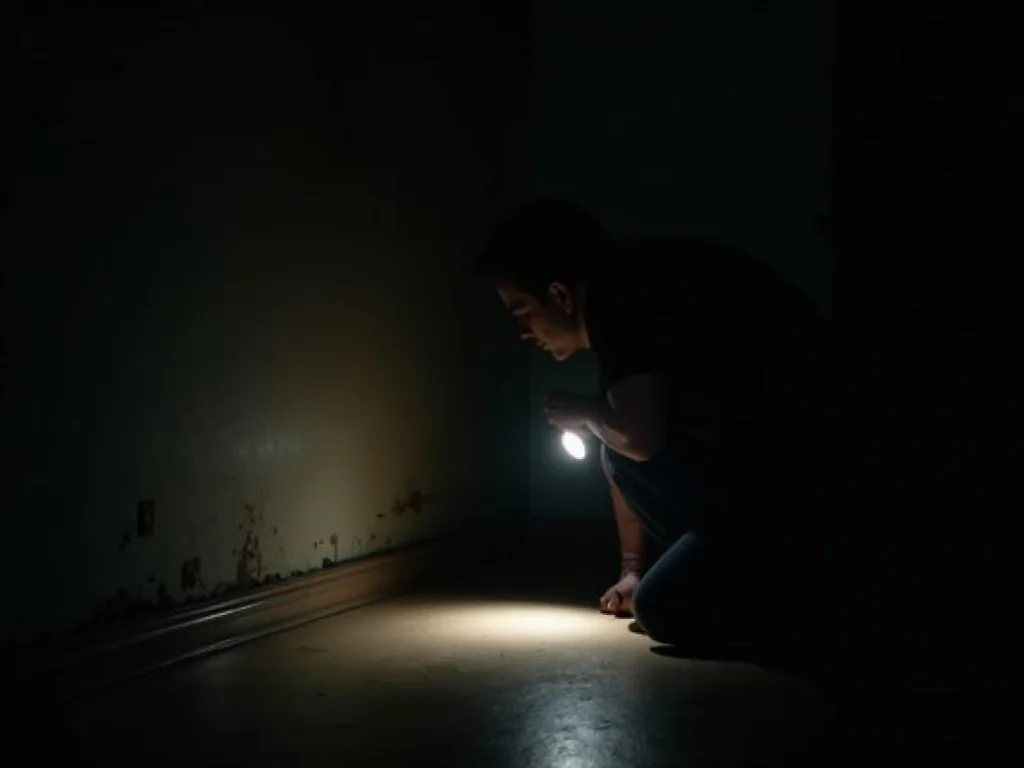
Black Mold in Your Las Vegas Home: Warning Signs and Safe Removal
 July 15, 2026·10 min read·VegasRebuild Editorial
Quick Answer: Black mold (Stachybotrys chartarum) grows in Las Vegas homes primarily inside wall cavities, under flooring, and around AC components where moisture accumulates despite the dry outdoor climate. It requires sustained moisture and organic material to colonize. Warning signs include a musty odor, visible dark staining on drywall or grout, and unexplained respiratory symptoms. Professional remediation by a certified restoration company is recommended for any growth exceeding 10 square feet or located inside walls and HVAC systems.
Most people assume Las Vegas is too dry for mold. I thought that too before I started digging into local water damage cases. The outdoor relative humidity in Las Vegas averages around 20 to 30 percent, which is genuinely hostile to most mold species. But inside your home, the story is completely different. Your air conditioner runs six or more months a year, creating condensation in ducts, on coils, and along the inside of walls where cool return-air paths meet warm exterior surfaces. Add one plumbing leak, one roof intrusion during monsoon season, or one unnoticed slab leak, and you have created a localized moisture environment that Stachybotrys and other mold species will colonize within 24 to 72 hours. I've seen homes in Spring Valley and Enterprise with significant black mold infestations hidden entirely inside walls, with zero visible exterior signs until the homeowner started noticing health symptoms or pulled a baseboard during a renovation. This guide covers what black mold actually is, why it grows here despite the climate, how to recognize it, and what removal actually involves.

Written by David Reyes
Software engineer in Summerlin, Las Vegas. Built VegasRebuild after losing $34,000 to hidden mold.
What Black Mold Actually Is and Why It Matters
Stachybotrys chartarum is the species most commonly called black mold. It is a slow-growing fungus that requires a consistently wet cellulose-based material to colonize. Drywall paper, wood framing, ceiling tile, and cardboard are its preferred substrates. Unlike some faster-growing mold species that appear within days of a moisture event, Stachybotrys typically requires materials that have been wet for at least one to two weeks before it can establish. This is actually important information for Las Vegas homeowners: a properly dried water damage event will not produce Stachybotrys. The problem arises when moisture goes undetected, whether from a slow slab leak, a pinhole in an AC condensate line, or a roof penetration that only leaks during the brief but intense monsoon rains. Stachybotrys produces mycotoxins, particularly trichothecenes, which are the compounds associated with its most serious health effects. It appears as a dark greenish-black colony with a slimy texture when wet and a powdery appearance when dry. It is worth noting that many dark-colored molds are not Stachybotrys: Cladosporium, Aspergillus niger, and Alternaria all produce dark pigmentation. Visual identification alone is not reliable. If you suspect black mold, a surface or air sample tested by a certified lab is the only way to confirm the species.
- •Stachybotrys requires sustained moisture on cellulose materials for one to two weeks minimum before colonizing
- •It appears dark greenish-black, slimy when wet, and powdery when dry
- •Visual identification is unreliable; lab testing confirms species
- •Mycotoxin production is what makes Stachybotrys more concerning than most common household molds
- •Common substrates include drywall paper, wood framing, ceiling tile, and particleboard
Why Black Mold Grows in Las Vegas Despite the Desert Climate
The outdoor climate of Las Vegas is genuinely inhospitable to mold. But your home creates microclimates that have nothing to do with outdoor humidity. The biggest driver in Las Vegas is the air conditioning system. A standard split system AC runs nearly continuously from April through October, sometimes beyond. The evaporator coil operates at temperatures well below the dew point of indoor air, which means condensation forms on the coil constantly during operation. That condensate is supposed to drain through a condensate line into a floor drain or outside. When that line clogs with algae, mineral deposits from hard water, or debris, condensate backs up into the air handler pan, overflows, and soaks into surrounding drywall, insulation, and wood framing. Because the affected area is inside a wall or mechanical closet, the moisture often goes undetected for weeks. A second major pathway is the monsoon season, which brings Las Vegas its most intense rainfall, often in short concentrated bursts. Roof flashing failures, window seal degradation, and foundation cracks that are invisible during the dry season suddenly allow water intrusion. Desert soil around your foundation expands and contracts dramatically with the wet-dry cycling, which opens gaps in stucco and foundation interfaces that feed moisture into wall cavities. Plumbing leaks inside walls, particularly from supply lines running through interior walls to second-floor bathrooms, are a third common source. Because these leaks drip slowly rather than flooding dramatically, they saturate wall cavities over weeks before any visible sign appears.
- •AC condensate line clogs are the most common moisture source feeding mold in Las Vegas homes
- •Air handler overflow pans saturate wall cavities and insulation without visible exterior signs
- •Monsoon season roof and window intrusions create localized wet spots in wall assemblies
- •Desert soil expansion and contraction opens stucco and foundation gaps seasonally
- •Slow plumbing leaks inside interior walls saturate framing over weeks before detection
Health Risks: What Exposure to Black Mold Actually Does
I want to be straightforward here rather than either minimizing or exaggerating the health risks. Stachybotrys exposure is genuinely concerning, particularly for specific populations, but the severity of effects depends heavily on the extent of growth, how long exposure has occurred, individual sensitivity, and whether the growth is actively disturbed (which releases spores and mycotoxin-bearing particles into air). For most healthy adults, low-level Stachybotrys exposure produces symptoms similar to allergies: nasal congestion, throat irritation, coughing, sneezing, and watery eyes. These symptoms often improve when the person leaves the affected building and return when they come home, which is a useful diagnostic pattern. More prolonged or intense exposure can cause headaches, fatigue, difficulty concentrating, and in some cases skin irritation. The populations most at risk for serious health effects are infants, the elderly, people with pre-existing respiratory conditions like asthma, and individuals who are immunocompromised. There is ongoing scientific discussion about the extent to which Stachybotrys mycotoxins cause the more severe neurological symptoms sometimes attributed to them. What is not in dispute is that any active mold infestation represents a degraded living environment that should be remediated, both for health and for the structural integrity of the building materials being consumed.
- •Common symptoms: nasal congestion, coughing, throat irritation, watery eyes
- •Pattern of symptoms improving outside the home and returning indoors suggests mold exposure
- •At-risk groups: infants, elderly, asthmatics, and immunocompromised individuals
- •Prolonged exposure associated with headaches, fatigue, and difficulty concentrating
- •Mold also causes ongoing structural degradation of drywall, framing, and insulation regardless of health symptoms
DIY Mold Removal: What You Can Safely Handle and What You Cannot
The EPA draws the line at 10 square feet as the threshold above which professional remediation is recommended. For small visible surface mold patches on tile, grout, or non-porous surfaces like glass or metal, a homeowner can clean the affected area using an EPA-registered disinfectant or a solution of one cup of bleach per gallon of water, wearing gloves, safety glasses, and an N95 respirator. The critical word is surface. Bleach and household cleaners do not penetrate porous materials. If black mold has colonized drywall, wood framing, or insulation, cleaning the surface accomplishes almost nothing because the fungal hyphae extend deep into the material. Those materials must be physically removed and disposed of. This is where most DIY attempts fail. Homeowners scrub visible surface stains, the area looks clean, and mold returns within weeks because the colony inside the material was never addressed. For any mold that is inside a wall cavity, behind flooring, in an attic, or associated with your HVAC system, professional remediation is not optional; it is the only approach that will actually resolve the problem. Disturbing a hidden mold colony without proper containment barriers and negative air pressure machines will spread spores throughout your home, potentially contaminating areas that were previously clean.
- •DIY is appropriate only for surface mold under 10 square feet on non-porous materials
- •Use an N95 respirator, gloves, and eye protection for any mold cleaning work
- •Bleach does not penetrate porous materials and will not kill mold inside drywall or wood
- •Porous materials with mold must be removed and bagged for disposal, not cleaned in place
- •Disturbing hidden mold without containment spreads spores to previously clean areas
- •HVAC-associated mold requires professional remediation regardless of visible colony size
Professional Black Mold Remediation: What the Process Looks Like
When a certified remediation team arrives for a black mold job, the process follows a structured protocol designed to contain the affected area, remove contaminated materials safely, treat remaining surfaces, and verify clearance before the area is rebuilt. The first step is containment: plastic sheeting and negative air pressure machines isolate the work area so that spores disturbed during demolition cannot migrate to other parts of the house. HEPA-filtered air scrubbers run continuously during the entire remediation process. Affected drywall, insulation, baseboards, and in some cases flooring and wood framing are removed and double-bagged in heavy-duty plastic for disposal. The remediation team photographs everything for insurance documentation. After removal, remaining structural surfaces are HEPA-vacuumed to remove settled spores, then treated with an EPA-registered fungicide. An antimicrobial coating is applied to encapsulate any residual contamination on surfaces that cannot be fully removed, such as concrete block walls. The final step before reconstruction is clearance testing, where an independent industrial hygienist takes air samples to verify that spore counts have returned to normal background levels. This clearance step is important: it provides objective confirmation that remediation was successful before you invest in reconstruction. The entire process for a moderate infestation in one or two rooms typically takes three to five days.
- •Containment with plastic sheeting and negative air pressure is established before any demolition
- •HEPA air scrubbers run continuously throughout the remediation process
- •All porous affected materials are removed, bagged, and disposed of as regulated waste
- •Remaining surfaces are HEPA-vacuumed then treated with EPA-registered fungicide
- •Clearance air testing by an independent hygienist confirms remediation success before rebuild
Mold Testing and Costs in Las Vegas
Mold testing in Las Vegas serves two purposes: confirming the presence and species of mold before remediation, and providing clearance verification that remediation was successful afterward. Pre-remediation testing is most valuable when you have symptoms or odor but no visible mold, when you want species identification to understand the health risk level, or when you need documentation for an insurance claim or real estate transaction. Air sampling collects spores onto a cassette that is analyzed by a certified lab. A basic two-sample air test (one inside, one outside for comparison) runs $200 to $400 including lab fees. A more comprehensive assessment with multiple room samples and a written report from a certified industrial hygienist typically runs $500 to $1,000. Professional black mold remediation costs in Las Vegas vary based on the area affected and the extent of material removal required. A contained single-wall cavity remediation might run $1,500 to $3,000. A larger infestation affecting multiple rooms, HVAC components, or attic framing can reach $5,000 to $15,000 or more. Reconstruction of removed drywall, flooring, and finishes is billed separately from remediation. Homeowner's insurance sometimes covers mold remediation when it results from a covered water damage event (such as a sudden pipe burst), but typically excludes mold from long-term neglect or maintenance failures. Document the moisture source carefully and involve your insurance company early.
- •Basic air sample test (two samples plus lab): $200 to $400
- •Certified industrial hygienist assessment with written report: $500 to $1,000
- •Single-room or wall-cavity remediation: $1,500 to $3,000
- •Multi-room or HVAC-involved remediation: $5,000 to $15,000+
- •Reconstruction of removed materials is billed separately from remediation
Frequently Asked Questions
Yes. The outdoor climate is dry, but the interior environment of a Las Vegas home is regularly exposed to moisture from AC condensate systems, plumbing leaks, and monsoon-season intrusions. Wall cavities, mechanical closets, and areas around AC air handlers maintain enough localized humidity to support Stachybotrys growth when a moisture source is present. The desert climate actually makes the problem harder to detect because homeowners do not expect mold and often attribute symptoms to allergies or dust.